


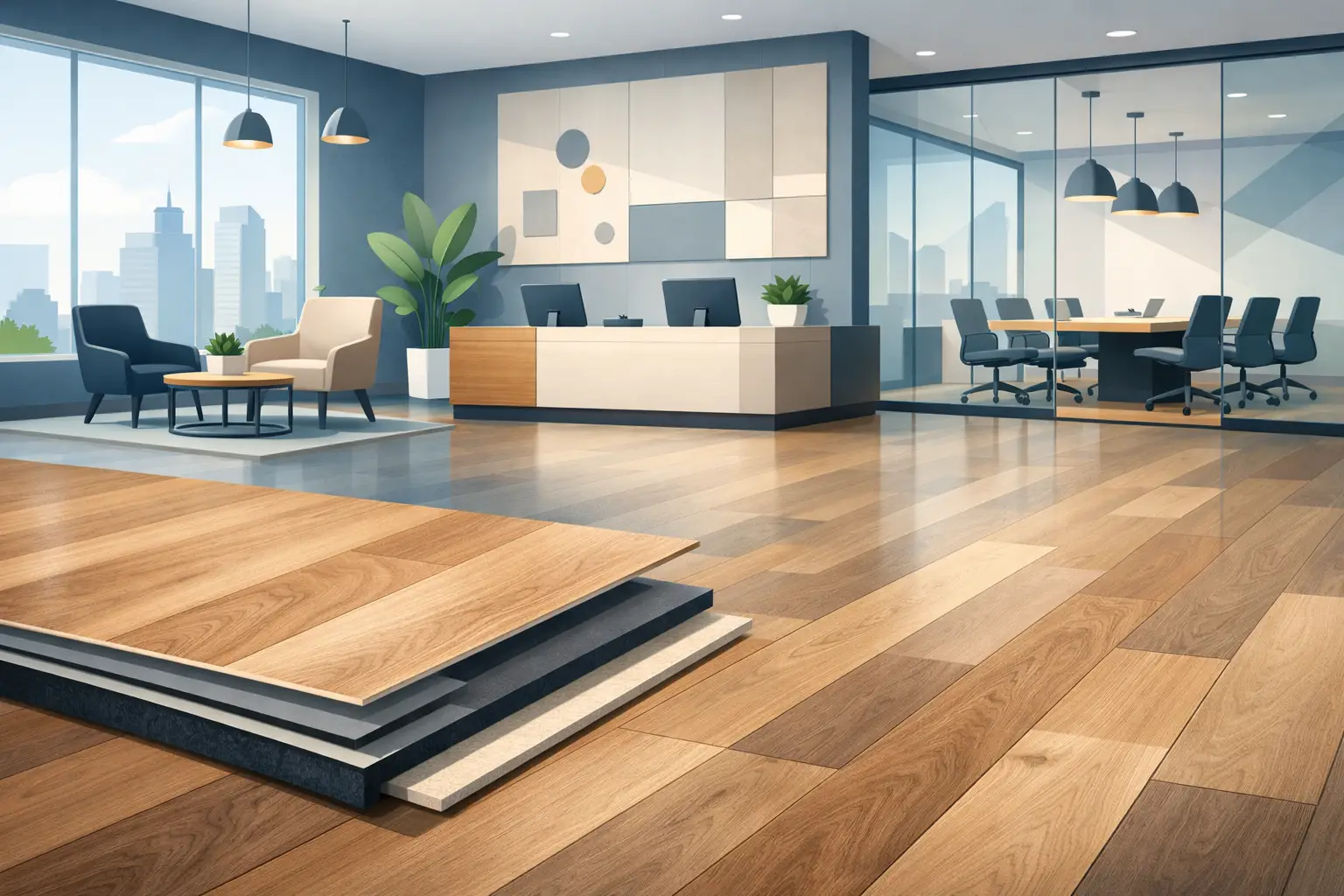
Commercial flooring gets tested fast. Foot traffic, rolling loads, spills, cleaning chemicals, and tight installation schedules all expose weak materials early. That is why SPC flooring for commercial spaces has become a serious option for builders, designers, and property owners who need a floor that looks refined but performs like a workhorse.
SPC stands for stone plastic composite. It is a rigid core flooring product engineered for dimensional stability, moisture resistance, and everyday durability. In commercial environments, those qualities matter because flooring is not just a finish. It affects maintenance budgets, occupant experience, installation timing, and long-term replacement cycles.
Why SPC flooring for commercial spaces gets specified
The main reason SPC continues to gain traction is simple: it solves several common project problems at once. It offers the visual appeal of wood or stone-inspired surfaces, but without many of the vulnerabilities that come with traditional materials.
In offices, retail stores, multifamily common areas, hospitality spaces, and light healthcare environments, flooring often needs to balance aesthetics with speed and practicality. SPC performs well here because it is typically waterproof, resistant to wear, and easier to maintain than many soft-surface or natural material alternatives. It also tends to install efficiently, which helps when project schedules are compressed.
That said, not every commercial project has the same demands. A boutique retail space has different traffic patterns than a medical office. A leasing office has different acoustic needs than a restaurant. SPC is a strong fit in many settings, but the right specification still depends on use case, subfloor conditions, and performance priorities.
What makes SPC different from other commercial flooring options
SPC flooring is built around a dense rigid core. That core gives the product better indentation resistance and dimensional stability than many traditional flexible vinyl floors. In practical terms, it helps the floor hold up under changing temperatures, minor subfloor imperfections, and heavy daily use.
Compared with laminate, SPC has a clear moisture advantage. Laminate can look excellent, but water exposure is a known risk, especially in entry areas, break rooms, or tenant spaces where spills are routine. SPC is better suited to those conditions.
Compared with glue-down LVT, rigid SPC can reduce some installation complexity, especially when a floating system is used. However, that does not automatically make it the better choice for every commercial job. Glue-down products may still be preferred where rolling loads, very large open areas, or strict sound control requirements drive the specification.
Compared with ceramic tile, SPC is generally faster to install and more forgiving underfoot. Tile remains a strong option for certain high-moisture or highly specialized applications, but it comes with grout lines, a harder feel, and often more labor-intensive installation.
Performance factors that matter on real projects
Commercial buyers do not need broad promises. They need flooring that addresses measurable project demands.
Durability is the first checkpoint. A well-made SPC floor should have a wear layer suitable for the traffic level of the space. In a low-demand office suite, one specification may be enough. In retail, corridors, or public-facing areas, the wear layer and surface finish need closer review.
Water resistance is another major benefit. In spaces where tracked-in rain, janitorial cleaning, or routine spills are expected, SPC can reduce the risk of damage associated with moisture-sensitive flooring. That does not mean every installation is immune to all water-related issues. Moisture from the slab, poor perimeter detailing, or improper installation can still create problems.
Maintenance also drives product selection. Commercial property teams generally want finishes that clean easily and do not require waxing, polishing, or specialized care. SPC fits that need well. Regular sweeping and damp mopping are often enough to keep it presentable, which can reduce labor and maintenance costs over time.
Acoustics, however, require a more careful look. Some SPC products include attached underlayment, and some assemblies perform better than others. But rigid core flooring is not automatically the quietest option in every environment. In upper-floor tenant spaces, hospitality settings, or multifamily corridors, sound transmission ratings should be reviewed early instead of assumed.
Best commercial applications for SPC flooring
SPC works especially well in commercial spaces that need a clean, durable finish with predictable upkeep. Office interiors are a common fit because the floor can handle daily traffic while supporting a polished design palette. It also works well in conference rooms, lobbies, reception areas, and tenant improvement projects where appearance matters but downtime needs to stay low.
Retail is another strong application. Stores need flooring that stands up to steady foot traffic, frequent cleaning, and seasonal weather tracked in from entrances. SPC can deliver that while maintaining a consistent visual presentation across the sales floor.
In multifamily developments, SPC is often used in corridors, amenity areas, leasing offices, and sometimes unit interiors, depending on the project’s acoustic and performance requirements. For developers and property managers, the combination of durability and low maintenance is a practical advantage.
Healthcare and hospitality can also benefit from SPC, especially in waiting areas, administrative spaces, guest rooms, and similar environments. The key is matching the product to the operational demands of the space. In settings with strict infection control protocols, heavy rolling equipment, or highly specialized cleaning requirements, product details should be evaluated carefully rather than generalized.
Design flexibility is part of the value
Commercial flooring decisions are rarely based on performance alone. Designers and owners want materials that support the overall look of the project.
One reason SPC has become popular is the range of visuals now available. Wood-look planks remain the most requested format because they bring warmth to offices, hospitality interiors, and retail environments. Stone and concrete-inspired finishes can also work well in contemporary commercial spaces that need a more architectural feel.
Color, plank size, surface texture, and finish all influence the final result. A lighter tone can help open up a lobby or showroom. A mid-tone wood look may better conceal day-to-day dirt in high-traffic spaces. Texture can add realism, but it should not make cleaning more difficult. Good specification is about balancing the visual goal with maintenance realities.
For project teams that want specification-ready support, working with a supplier that understands both performance and finish coordination can simplify the process. That is where experienced building product partners such as First Class Building Products can add value beyond basic material supply.
What to check before you specify SPC
A strong product still depends on the right installation environment. Subfloor preparation matters. If the slab is uneven, moisture conditions are ignored, or transitions are poorly planned, the floor may not perform as intended.
Wear layer, total thickness, locking system quality, slip resistance, and warranty terms should all be reviewed against the actual use of the space. This is especially important in commercial settings where maintenance teams, tenants, and visitors all interact with the floor differently than in a residential environment.
It is also worth checking compatibility with rolling furniture, point loads, and cleaning methods. A floor that performs well in a private office may not be the right fit for a busy reception area with constant wheeled traffic. That does not mean SPC should be ruled out. It means the product needs to be selected with the use pattern in mind.
Lead times and consistency also matter on larger projects. If a space requires phased installation or future replacement material, color continuity and supplier reliability become part of the flooring decision.
The cost question: upfront vs long-term value
SPC is often attractive because it can offer a strong balance between initial cost and lifecycle value. It may not always be the cheapest line item on bid day, but commercial buyers know that replacement frequency, maintenance demands, and installation efficiency affect total cost more than unit price alone.
If a product helps reduce downtime, lowers routine maintenance, and holds its appearance in active spaces, it can deliver better value over time. That is especially relevant for property owners managing multiple units or commercial facilities where flooring disruptions create operational headaches.
Still, the lowest-cost SPC product is not always the best commercial choice. Construction professionals should look closely at product construction, wear layer, performance data, and supplier support. Cheap material that fails early usually costs more in the long run.
SPC flooring for commercial spaces works best when it is treated as a building solution, not just a finish selection. When the product is matched correctly to traffic, moisture exposure, design goals, and maintenance expectations, it gives project teams a dependable way to achieve both performance and appearance. If you are evaluating flooring for a new build, renovation, or tenant improvement, the best next step is to specify for the actual demands of the space, not the broadest product claim.



Leave a Reply