


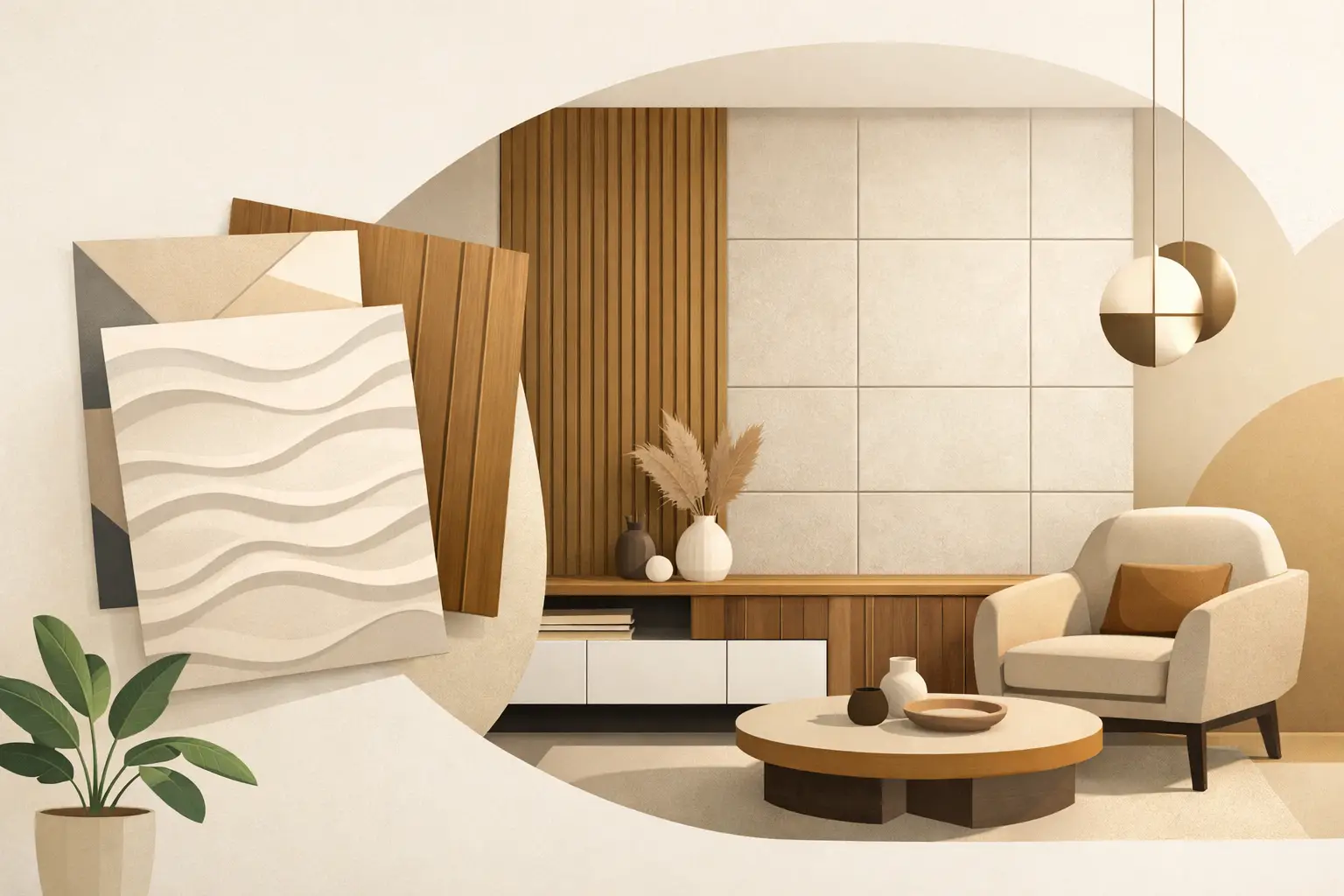
A feature wall can change the perceived quality of a lobby, retail space, office, or living room faster than a full renovation. The result only holds up, however, when decorative wall panels for interiors are selected for the actual conditions of the space, not just a sample board. Material construction, substrate preparation, traffic level, moisture exposure, and finish all determine whether the installation looks refined for years or becomes a maintenance issue.
For builders, designers, and property owners, panels offer a practical way to introduce texture, warmth, depth, and architectural definition without relying on labor-intensive site-built details. The right system can also create a more consistent finish across large areas, conceal minor wall irregularities, and simplify future cleaning compared with heavily textured painted surfaces.
Start With the Room, Not the Finish
A panel that works well behind a reception desk may not be the right choice for a hotel corridor, a restaurant restroom, or a basement media room. Before reviewing colors or profiles, define what the wall needs to handle. Consider humidity, cleaning frequency, direct impact, sunlight, nearby heat sources, and whether the wall will carry accessories such as televisions, shelving, signage, or handrails.
Interior wall panels are often chosen for one of four material approaches: wood-based decorative panels, PVC or polymer panels, WPC panels, and metal or aluminum-based systems. Each can deliver a polished appearance, but their performance characteristics differ.
Wood-based panels bring natural visual depth and work especially well in dry, conditioned spaces such as living rooms, executive offices, bedrooms, and feature walls. They require appropriate finishing and more care around moisture. PVC and other polymer panels are lightweight, washable, and well suited to damp locations where routine cleaning matters. WPC panels combine a wood-like appearance with greater moisture resistance and dimensional stability than many conventional wood products. Aluminum panels provide a crisp, contemporary look and can be a strong fit for high-design commercial interiors, particularly where durability and custom finishes are priorities.
Material selection should also account for project-specific code requirements. Fire performance, smoke development, flame-spread ratings, and installation requirements depend on the panel product and the complete wall assembly. A decorative finish should never be assumed to meet a required rating without verified documentation.
Decorative Wall Panels for Interiors Need a Clear Purpose
Panels perform best when they solve a design or operational need. In a residential setting, that may mean adding a fluted feature behind a bed, defining a dining area in an open floor plan, or creating a durable focal point around an entertainment wall. In commercial work, the need may be more functional: improving the appearance of high-traffic corridors, protecting walls in tenant spaces, giving a reception area a branded finish, or providing a cleanable surface in service areas.
Fluted and slatted profiles add shadow lines that make a wall feel taller or more detailed. They are effective on broad, uninterrupted surfaces, but profile depth matters. Deep grooves can collect dust and may require more frequent cleaning in restaurants, medical offices, and other closely maintained environments. Smooth panels are generally easier to wipe down and can be a better choice for utility-focused spaces.
Scale deserves equal attention. A narrow fluted profile may look precise in a small powder room or condominium entry, while a wider profile can read more clearly across a two-story lobby wall. Large-format panels minimize visible seams, but they require careful handling, accurate layout, and a sufficiently flat substrate. Smaller panels can be easier to transport and replace, though additional joints may become part of the finished appearance.
Plan the Wall Assembly Before Ordering
The most common panel failures begin behind the finish. Adhesive cannot correct a wall that is wet, unstable, heavily textured, or out of plane. Before installation, confirm that the substrate is dry, sound, clean, and suitable for the selected fastening method. Repair loose drywall, remove failing paint, and address moisture sources before they are covered.
For walls that are noticeably uneven, a furring system or properly prepared backer may be necessary to achieve a straight finished plane. This adds depth and cost, but it can prevent telegraphing, open joints, and poor alignment. It can also create a service cavity for wiring when planned correctly.
Electrical coordination should happen early. Recessed outlets, switch plates, data ports, sconces, and wall-mounted equipment all affect panel layout. A panel design that looks continuous on a rendering can lose impact when cuts are made around poorly placed electrical boxes. Establish centerlines, termination points, and accessory locations before panels are cut.
Expansion and contraction also need consideration. Many panel materials move slightly with temperature and humidity changes. Follow the manufacturer’s acclimation, spacing, adhesive, and fastening instructions rather than treating all products like trim lumber. A clean reveal or approved trim detail often accommodates movement better than forcing panels tightly together.
Choose Finish Details That Look Intentional
A strong panel installation is defined by its edges as much as its field. Outside corners, inside corners, panel ends, transitions to painted walls, and connections at baseboards or ceilings should be resolved before material is ordered. Matching trims offer a finished appearance, while black reveals or metal channels can create a more architectural, modern line.
Color selection should be evaluated under the lighting that will be used in the finished space. Warm wood tones can look rich under soft residential lighting but appear orange under certain commercial LEDs. Dark charcoal and black panels create contrast and hide some minor marks, yet they can make a narrow room feel smaller if used on every wall. Lighter tones reflect more light and can make interiors feel open, although they may show scuffs more readily in busy areas.
Custom colors, widths, lengths, and finishes can be worthwhile when a project needs brand consistency or a precise design match. The trade-off is longer lead time and less flexibility for last-minute changes. For projects on a compressed schedule, confirm available stock dimensions and trim options before finalizing the design.
Installation Quality Protects the Investment
Panel systems vary widely in how they attach. Some use construction adhesive, while others rely on clips, screws, interlocking edges, or a combination of mechanical fastening and adhesive. The correct method depends on panel weight, substrate type, wall height, expected movement, and manufacturer requirements.
Installers should dry lay the arrangement and check the visual balance of the first and last panels. Starting from one corner without a layout plan can leave an awkward narrow strip at the opposite end. On feature walls, it is often better to center the pattern on the most visible element, such as a bed, fireplace, reception desk, or television, then work outward.
Keep panels protected until installation is complete, particularly on active job sites. Even durable decorative surfaces can be damaged by drywall dust, adhesive residue, tool impacts, or material staging. Once installed, use cleaning products approved for the panel finish. Abrasive pads, harsh solvents, and excessive water can damage coatings or work into joints where they do not belong.
Specify for Long-Term Maintenance
The lowest initial material cost is not always the best value. A panel installed in a high-contact hallway, child-friendly home, hospitality space, or retail environment should be evaluated for cleanability, scratch resistance, replaceability, and the availability of matching material for future repairs. Ordering a small amount of attic stock is a practical safeguard, especially for custom finishes or projects with phased construction.
For projects that require a combination of design flexibility and dependable performance, First Class Building Products can help align decorative panel options with the wall condition, intended use, and desired finish. Product selection is more effective when it begins with the full application rather than a color sample alone.
The best interior panel projects do not depend on a dramatic pattern or an expensive finish. They succeed because the material fits the room, the wall assembly is prepared correctly, and every edge is planned before installation begins.

Leave a Reply