


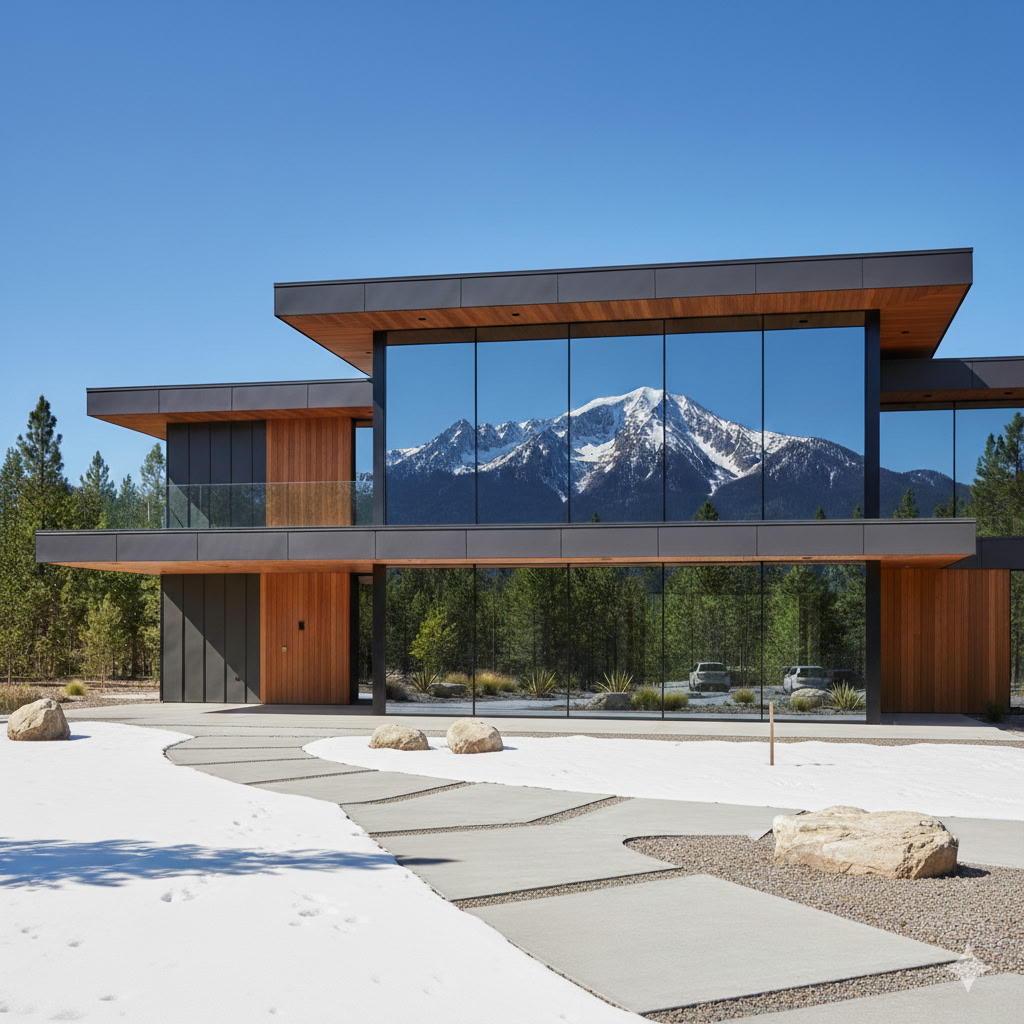

A glass failure at a busy entry, stair guard, or storefront is not just a replacement issue. It can affect occupant safety, security, weather protection, schedules, and liability. The tempered versus laminated glass decision should be made around the opening’s actual risk and performance requirements, not simply by choosing the product with the lower initial cost.
Both products are safety glazing options used throughout residential and commercial construction. They behave very differently after impact, however, and that difference determines where each one delivers the best value. Tempered glass is built to resist impact and break into small pieces. Laminated glass is built to remain together when broken. For many projects, the right answer is one of these products. For higher-performing window, door, railing, and facade assemblies, the answer may be a combination of both.
Tempered Versus Laminated Glass: The Core Difference
Tempered glass is heat-treated glass. During manufacturing, the glass is heated and rapidly cooled to create high surface compression. This process makes it significantly stronger than standard annealed glass of the same thickness. When tempered glass breaks, it fragments into many small, relatively blunt pieces rather than large sharp shards.
Laminated glass consists of two or more glass lites bonded with an interlayer, commonly polyvinyl butyral (PVB) or an ionoplast interlayer. If the glass cracks under impact, the interlayer holds the fragments in place. The opening may be damaged, but the panel can remain largely intact until replacement.
That post-breakage behavior is the practical distinction. Tempered glass reduces the risk of serious laceration from sharp pieces. Laminated glass provides a retained barrier after breakage. Neither is automatically better in every location.
Where Tempered Glass Performs Best
Tempered glass is a proven choice where impact resistance, safety glazing compliance, and clean visual clarity are the main requirements. It is widely specified for shower enclosures, interior glass doors, sidelites, patio doors, glass partitions, table tops, and certain railing applications.
For exterior openings, tempered glass can also be a practical option in insulated glass units. A typical unit may combine tempered glass with low-E coatings, argon fill, and an appropriate spacer system to support energy performance. This gives builders a familiar, cost-conscious assembly for many residential windows and doors.
Tempered glass has several installation advantages. It is generally lighter than a comparable laminated build-up, easier to handle, and often more economical. It also has good resistance to thermal stress, which can matter in dark-framed systems, large sun-exposed elevations, and areas with partial shading.
The trade-off is straightforward: once a tempered panel breaks, it is gone. The glass falls away from the opening, leaving no meaningful barrier against weather, unwanted entry, or falling debris. That may be acceptable for an interior shower enclosure. It is less acceptable for a ground-floor storefront, a secure entry, or a building located in a severe weather zone.
Important Fabrication Considerations for Tempered Glass
Tempered glass must be cut, drilled, edged, and fabricated before tempering. Once it has been heat-treated, it cannot be resized or modified in the field. A late change to hardware locations, hinge cutouts, or panel dimensions usually means ordering a new lite.
Project teams should also understand the small possibility of spontaneous breakage caused by nickel sulfide inclusions. Heat-soak testing can reduce this risk for projects where it is a concern, particularly in demanding commercial glazing applications. It does not eliminate the possibility entirely, but it is a worthwhile specification discussion for large or hard-to-access panels.
Where Laminated Glass Adds Value
Laminated glass is the stronger choice when a broken panel must continue to provide protection. Its interlayer retains fractured glass, helping the assembly remain in place after accidental impact, attempted forced entry, or certain weather events.
This makes laminated glass especially useful for street-level windows, doors with large glass areas, storefronts, skylights, overhead glazing, glass floors, balcony guards, and hurricane-rated assemblies. It is also frequently used where security and occupant protection need to work together.
A laminated panel can also improve acoustics. The interlayer helps dampen sound transmission, which is valuable near traffic corridors, airports, active retail areas, schools, multifamily buildings, and offices. The improvement depends on glass thickness, airspace, frame performance, and the specific interlayer, but laminated glass is often part of an effective sound-control strategy.
UV filtering is another practical benefit. Many laminated interlayers block a substantial portion of ultraviolet radiation, helping protect flooring, furnishings, artwork, and interior finishes from fading. This can be relevant for homes with expansive glazing and commercial spaces with merchandise or display areas near windows.
Laminated glass does have trade-offs. It is typically heavier and more expensive than tempered glass, and its thickness may require a frame, hardware, or glazing pocket designed for the assembly. Exposed edges need proper detailing because prolonged moisture exposure can affect some laminated products over time. The complete system matters as much as the glass selection.
Interlayer Choice Matters
Not all laminated glass is the same. Standard PVB interlayers are widely used for safety glazing, sound control, and UV performance. Stiffer ionoplast interlayers may be specified where enhanced structural behavior, edge stability, or severe weather resistance is required.
For exterior applications, the glass fabricator and system supplier should verify compatibility between the interlayer, sealants, setting blocks, frame drainage, and intended exposure. A premium glass specification can underperform if it is installed in a system that traps water or does not support the panel correctly.
Choosing Glass by Application
The most efficient way to select safety glass is to begin with the location and expected hazard. Local building codes and the project’s glazing schedule should always guide the final specification. Safety glazing requirements commonly apply near doors, in hazardous locations, and around bathing areas, but the exact requirements depend on the jurisdiction and application.
For shower doors, interior partitions, and many residential sidelites, tempered glass is often the practical solution. It meets the need for safety glazing while maintaining a clean appearance and manageable cost.
For storefronts, entry systems, low-level exterior glazing, and areas exposed to security concerns, laminated glass is often more appropriate because it stays in the opening after breakage. A cracked laminated panel still requires prompt replacement, but it can provide valuable time to secure the building.
For skylights and overhead glass, retained fragments are a major consideration. Laminated glass is commonly used on the interior-facing lite to reduce the chance of broken glass falling below. The exterior lite may be tempered, heat-strengthened, or laminated depending on engineering, thermal, wind-load, and impact requirements.
For railings and glass guards, do not treat glass as a standalone product choice. Panel dimensions, support conditions, edge protection, base shoe design, handrail requirements, and load calculations all affect the correct specification. Laminated tempered glass is frequently used for demanding guard applications because it combines strengthened glass with post-breakage retention, but the assembly must be engineered and code-compliant.
Can You Use Tempered and Laminated Glass Together?
Yes. In fact, laminated tempered glass is often one of the most capable options for high-risk applications. It uses tempered lites with an interlayer between them, providing the strength characteristics of tempered glass and the fragment-retention benefits of lamination.
This configuration is common in high-performance railings, security-sensitive glazing, overhead applications, and impact-rated systems. It costs more and adds weight, so it should be specified where its performance benefits are needed rather than used indiscriminately.
Insulated glass units can also combine multiple glass types. For example, an exterior lite may address thermal stress or impact requirements, while an interior laminated lite adds safety, acoustic control, and UV protection. The right composition depends on the building envelope, orientation, climate, structural loads, and desired energy targets.
Questions to Resolve Before Finalizing the Specification
Before ordering, confirm whether the opening requires safety glazing, impact resistance, forced-entry delay, post-breakage retention, sound reduction, or solar-control performance. Review the glass size, thickness, support method, frame system, hardware, and exposure conditions together. These decisions affect fabrication lead times, panel weight, installation equipment, and overall cost.
It is also wise to verify the applicable code standard and testing requirements with the project architect, engineer, or authority having jurisdiction. Glass labels, certifications, and system documentation should match the approved drawings and the exact application. Substituting a different glass build-up late in the process can create compliance and warranty issues.
First Class Building Products helps project teams evaluate glass alongside the surrounding window, door, facade, and interior finish systems. That broader view helps prevent a common mistake: selecting a high-performing glass panel that is not matched to the frame, hardware, or environmental demands of the project.
The best glass choice is the one that performs when the panel is intact and when it is not. Specify tempered glass where safe breakage and strength are the priority. Specify laminated glass where retention, security, acoustics, or continued protection matter most. When the opening carries higher consequences, design the complete glazing system around the risk rather than asking one sheet of glass to solve every problem.


Leave a Reply