


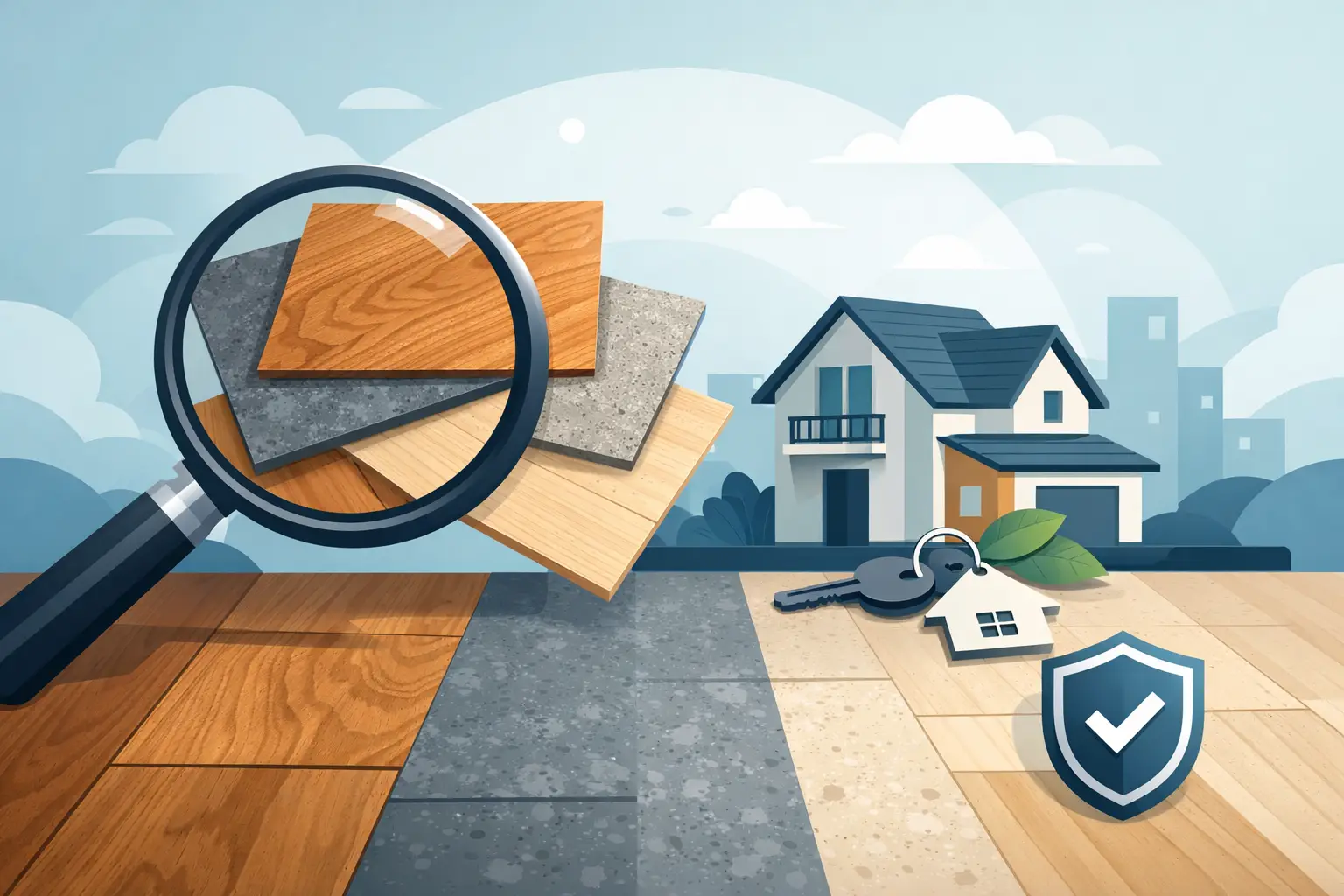
A flooring decision can protect a rental property’s operating budget or create a recurring cycle of repair calls, vacancy delays, and replacement costs. The best flooring for rental properties is rarely the least expensive material on the first invoice. It is the product that holds up to turnover, cleans quickly, suits the unit’s market position, and delivers a finished appearance tenants value.
For builders, developers, and property owners, the right specification starts with the building type and expected use. A pet-friendly apartment, a furnished short-term rental, and a higher-end townhome do not face the same demands. Moisture exposure, subfloor condition, tenant profile, local rent level, and maintenance capacity should all guide the selection.
What Rental Flooring Must Deliver
Rental flooring needs to do more than look good at lease signing. It should tolerate moving furniture, dropped items, pets, tracked-in grit, wet shoes, and frequent cleaning without losing its appearance. The material also needs to be practical to replace when a single room is damaged, especially in occupied multifamily buildings where downtime has a direct cost.
The most effective specifications balance five factors: water resistance, wear resistance, maintenance requirements, installed cost, and visual appeal. The priority shifts by room. Bathrooms and entry areas need moisture protection first. Bedrooms may justify a softer, lower-cost finish. Living areas typically need the strongest overall combination of durability and design flexibility.
Subfloor conditions matter as much as the surface material. Concrete slabs, uneven wood subfloors, and spaces with possible moisture migration can limit installation options. Addressing moisture and flatness before installation prevents many of the failures that are incorrectly blamed on the flooring itself.
Best Flooring for Rental Properties: SPC Flooring
For many apartments, single-family rentals, and commercial residential applications, stone plastic composite, or SPC, is one of the strongest all-around options. It combines a rigid core with a durable wear layer and a waterproof construction that performs well in kitchens, bathrooms, hallways, and living spaces. Its stability also makes it well suited to the temperature changes common near entries, patios, and large windows.
SPC flooring is not simply a practical choice. Modern plank formats can provide the wood-look styling tenants expect without the maintenance concerns of hardwood. Available colors, textures, and plank sizes allow owners to create a consistent finish package across multiple units while still matching the property’s design standard.
The main advantage is life-cycle value. SPC resists routine spills, is easy to clean, and does not require refinishing. When selected with an appropriate wear layer and installed over a properly prepared substrate, it can reduce turnover work significantly. For properties where pet ownership is common or where wet-weather traffic is unavoidable, these benefits are especially relevant.
There are trade-offs. SPC can sound harder underfoot than carpet and may telegraph significant subfloor irregularities if preparation is skipped. It is also not intended to correct a failing substrate. Use a quality underlayment where appropriate, follow expansion requirements, and specify a finish that fits the amount of natural light in the unit. Very dark colors can show dust, while very smooth, high-gloss surfaces can reveal scratches more easily than textured matte finishes.
Luxury Vinyl, Tile, Laminate, and Carpet Compared
Luxury vinyl plank and SPC are often grouped together, but they do not perform identically. Flexible luxury vinyl products can be a good fit for smooth, level floors and may feel slightly softer underfoot. Rigid-core SPC generally offers greater dent resistance and dimensional stability, making it a strong choice for busy rentals and spaces with more variable conditions.
Porcelain or ceramic tile remains a reliable flooring option for bathrooms, laundry rooms, and building entries. It handles water exceptionally well and can last for decades when properly installed. However, tile has higher labor costs, requires careful substrate preparation, and can be difficult to patch invisibly if damaged. Grout also needs to be specified carefully. A stain-resistant grout in a practical mid-tone can reduce cleaning demands and preserve a cleaner appearance between tenants.
Laminate can offer a convincing wood appearance at a competitive material cost, particularly in dry living areas and bedrooms. Its weakness is moisture. Although water-resistant laminate options have improved, standing water and damaged seams can still lead to swelling. It is a better fit for low-moisture spaces than for full-unit installation in rentals where maintenance response times may vary.
Carpet remains useful in selected applications, particularly bedrooms in budget-oriented properties or units where sound control is a major concern. It provides warmth and acoustic comfort, but it absorbs stains and odors, wears in traffic paths, and often requires replacement more frequently than hard-surface flooring. If carpet is necessary, choose a commercial-grade product with stain protection, a dense construction, and a color that conceals minor soiling. Avoid using it in dining areas, hallways, entrances, and pet-heavy properties.
Hardwood has strong appeal in premium rentals, but it requires a clear financial case. Genuine wood can elevate a high-end home or luxury unit, yet it is vulnerable to scratches, water exposure, and inconsistent tenant care. Engineered wood may offer more stability, but it still demands careful maintenance. In most standard rental applications, an upscale SPC or luxury vinyl finish can achieve a similar visual effect with fewer operational concerns.
Specify Flooring by Room, Not by Habit
Using one material throughout an entire property can simplify purchasing, but it is not always the best-performing approach. A durable hard-surface floor in kitchens, living rooms, hallways, and bathrooms minimizes water-related risk and makes cleaning faster. Bedrooms are the area where carpet may still make sense if the unit type, budget, and sound requirements support it.
For open-plan rentals, a continuous SPC floor can create a larger, more refined visual impression while eliminating transition strips between dry and wet zones. This approach works particularly well in condos, townhomes, and modern apartment units. In a more traditional property, tile at exterior entrances and waterproof plank flooring through the main living spaces can provide a practical division of materials.
Consider the property’s climate as well. In regions with snow, rain, or muddy conditions, waterproof flooring near entries is a priority. In dry climates, UV exposure may be a larger concern, particularly in units with expansive glazing. Select products with finishes designed to maintain color and surface integrity under expected conditions.
Control Long-Term Costs With the Right Specification
A low upfront price can become expensive when flooring needs replacement after only a few turnovers. The better approach is to calculate installed cost over the expected service life, including cleaning, repairs, tenant-caused damage, and vacancy time. Material consistency also has value. Keeping the same approved color and product line across a portfolio makes partial repairs and future renovations easier to manage.
For hard-surface products, specify enough wear resistance for the building’s traffic level rather than choosing only by color or price. Review the product warranty, installation method, underlayment requirements, and recommended cleaning procedures before finalizing the order. Commercial corridors, ground-floor units, and furnished rentals may need a higher-performance specification than upper-floor residential units with lower traffic.
A practical color strategy can further reduce maintenance pressure. Mid-tone natural wood looks, subtle variation, and textured finishes tend to hide dust and minor marks better than solid dark colors or very pale, uniform surfaces. The goal is not to disguise poor maintenance. It is to select a finish that continues to look presentable under normal rental use.
Installation Quality Protects the Investment
Even the best product will underperform if the installation is rushed. Moisture testing, floor leveling, acclimation when required, and correct perimeter expansion are essential steps. In renovation projects, remove failed materials completely and inspect the substrate rather than installing over an unknown condition to save time.
Installation details also affect future service. Maintain clear records of the product, color, batch information, and installation date. Order attic stock for repairs, especially for larger developments or distinctive finishes. This small planning step can prevent a minor damage claim from becoming a full-room replacement.
For most rental portfolios, waterproof SPC flooring offers the most balanced answer: a refined appearance, strong day-to-day durability, and manageable maintenance. Pair it with a specification built around the unit’s actual traffic, moisture exposure, and rent level, and the flooring becomes a dependable part of the property’s long-term performance rather than another turnover problem waiting to happen.

Leave a Reply