


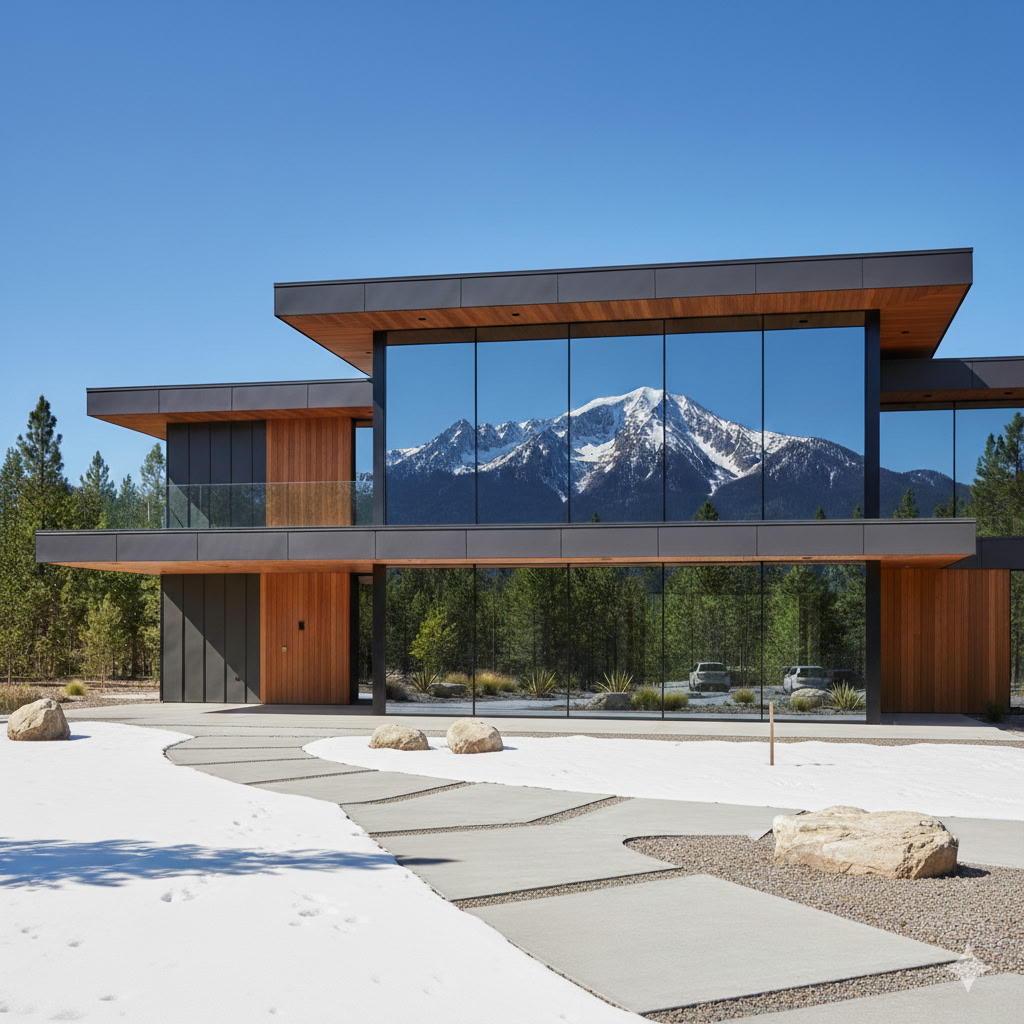
A commercial entrance has to do more than make a good first impression. It must handle daily traffic, support security and code requirements, control weather exposure, and continue operating reliably after years of use. The best commercial entry door materials depend on the building type, climate, occupancy, security needs, and desired architectural finish.
For a retail storefront, visibility and a refined aluminum-and-glass appearance may lead the decision. For a school, warehouse, or service entrance, a steel door may be the practical choice. A medical office or multifamily building may need a balanced solution that delivers insulation, low maintenance, and a more residential appearance. Selecting the right material starts with understanding where each option performs best.
What Commercial Entry Doors Need to Withstand
Commercial doors are exposed to conditions that residential doors often do not face. They may cycle hundreds of times per day, carry access-control hardware, support panic devices, and deal with carts, deliveries, wind, rain, and temperature swings. The door slab matters, but so do the frame, glazing, threshold, weatherstripping, hinges, closers, and lock preparation.
A material that looks appropriate on a rendering can become a maintenance issue if it does not match the application. For example, a large glass entry can create an inviting retail frontage, but it requires the right glazing specification, framing system, and hardware for wind loads, thermal performance, and repeated use. Likewise, a durable steel door can provide excellent security, but it may not be the best fit for a customer-facing main entrance where daylight and architectural detail are priorities.
Best Commercial Entry Door Materials by Application
Aluminum: Best for Storefronts and Modern Entrances
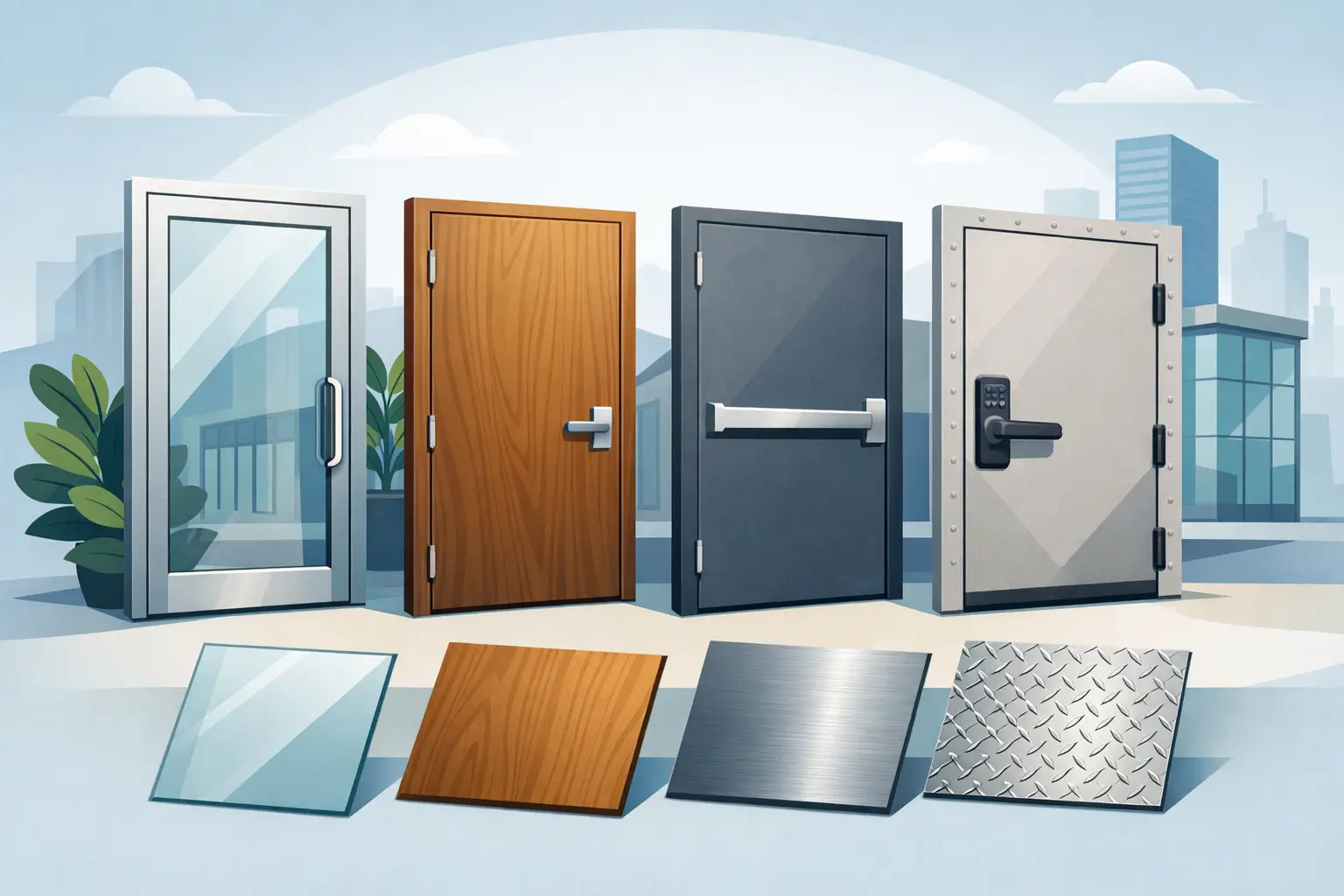
Aluminum is a leading choice for commercial storefront doors, office entries, hospitality spaces, and mixed-use developments. It is lightweight, corrosion-resistant, and well suited to narrow sightlines and large glass openings. Its flexibility also supports custom sizes, colors, finishes, and configurations that help an entry coordinate with ACM panels, aluminum cladding, glazing, and other exterior envelope materials.
Aluminum-framed glass doors are especially effective where daylight, visibility, and a contemporary appearance matter. They work well for retail spaces, showrooms, professional offices, and public-facing building entrances. Thermally broken aluminum systems can improve insulation by reducing heat transfer through the frame, an important consideration in regions with hot summers, cold winters, or high energy costs.
The trade-off is that aluminum is not the first choice for high-security back-of-house openings or heavy abuse locations. It performs best when specified as part of a complete commercial entrance system with suitable tempered or laminated safety glass, commercial-grade hinges or pivots, closers, and locking hardware.
Steel: Best for Security and High-Use Service Doors
Steel doors, often called hollow metal doors in commercial specifications, remain one of the most dependable options for secure, hard-working openings. They are common at schools, warehouses, industrial facilities, hospitals, utility rooms, stairwells, loading areas, and rear entries. Steel offers strong impact resistance, reliable hardware support, and a wide range of fire-rated configurations.
For exterior use, galvanized steel and a high-quality factory finish help protect against corrosion. Insulated steel doors can also provide good thermal performance, particularly when paired with an insulated frame and properly installed perimeter seals. They are available with vision panels when staff visibility or daylight is needed without giving up the durability of a steel slab.
Steel does require attention in coastal areas and consistently wet environments. Scratches or damaged coatings should be repaired promptly, since exposed metal can corrode over time. For customer-facing main entrances, steel can also feel more utilitarian than aluminum or fiberglass unless it is specified with architectural finishes, glazing, or decorative details.
Fiberglass: Best for Low Maintenance and Weather Exposure
Fiberglass commercial doors are a practical option for offices, clinics, multifamily properties, clubhouses, and light-commercial buildings that need a polished appearance with dependable exterior performance. Fiberglass does not rust, is resistant to dents, and performs well in wet or humid climates. It can also provide a warmer, more refined look than a standard steel service door.
Many fiberglass doors are built with insulated cores, making them a strong option where energy efficiency is a major requirement. They can be finished in smooth colors or wood-grain styles, allowing property owners to achieve a premium entrance without the maintenance demands of natural wood. This makes fiberglass especially useful for entries exposed to sun, rain, and seasonal temperature changes.
The key limitation is application. Not every fiberglass door is designed for the traffic level or hardware requirements of a busy public entrance. Before specifying one, verify the door’s commercial rating, frame compatibility, hinge reinforcement, lock preparation, and warranty. A fiberglass door may be an excellent choice for a low- to medium-traffic office entry, but a high-volume retail entrance may require aluminum storefront construction or a more specialized commercial system.
Glass and Aluminum Storefront Systems: Best for Visibility
When transparency is part of the business model, glass is not simply a design feature. It is an operational asset. Retailers use it to display merchandise, restaurants use it to create openness, and office buildings use it to bring daylight into reception areas. In most commercial applications, glass is combined with aluminum framing rather than used as a standalone door material.
Safety glass is essential. Tempered glass is commonly used because it is designed to break into smaller pieces if damaged. Laminated glass adds another layer of performance by holding together when broken, which can support security, sound control, and occupant protection. Insulated glass units can improve energy performance, while low-emissivity coatings help manage solar heat gain and interior comfort.
Glass-heavy entries require thoughtful detailing. Large openings should be evaluated for local wind loads, door width, hardware type, accessibility clearances, and the risk of direct impact. A good storefront system balances visual openness with the practical demands of the site.
Wood: Best for Premium Architectural Character
Wood doors deliver a level of warmth and material character that other options cannot fully duplicate. They are often selected for boutique hospitality, luxury offices, private clubs, religious facilities, and high-end multifamily projects. A properly detailed wood entry can create a memorable arrival experience and complement stone, metal panels, architectural glass, and upscale interior finishes.
However, wood requires the most disciplined maintenance of the common exterior door materials. Sun exposure, moisture, and temperature movement can affect its finish and dimensional stability. Exterior-grade species, engineered construction, protective overhangs, high-performance sealants, and a regular refinishing plan are necessary for long-term results.
Wood is best specified when architectural impact justifies the upkeep and the building owner understands the maintenance commitment. It is generally not the most cost-effective choice for an exposed, high-traffic commercial entry with limited facility maintenance resources.
How to Choose the Right Door Material
The most effective specification begins with the opening, not the catalog. Consider who uses the door, how often it operates, what weather reaches it, and what it must protect. A rear delivery entrance has different priorities from a main office lobby, even when both are exterior doors.
For a faster selection process, evaluate these five factors together:
- Traffic and abuse: High-frequency public entries need commercial-rated construction, reinforced hardware locations, and durable finishes.
- Security and life safety: Consider access control, panic hardware, fire ratings, forced-entry resistance, and glazing requirements.
- Climate and energy performance: Insulated cores, thermal breaks, weatherstripping, and glazing selection affect comfort and operating costs.
- Maintenance capacity: Steel coatings, wood finishes, glass cleaning, and hardware adjustments all require different levels of ongoing attention.
- Design integration: The door should align with the facade, interior finishes, signage, daylight goals, and overall building identity.
Material selection also affects the frame choice. Aluminum storefront doors typically pair with aluminum framing, while hollow metal steel doors commonly use steel frames. Fiberglass and wood doors may use several frame types depending on the project. Mixing incompatible components can weaken performance, complicate installation, and create avoidable warranty issues.
Do Not Overlook Hardware and Installation
Even the right door material can underperform with the wrong hardware package. Commercial-grade hinges, pivots, closers, thresholds, exit devices, pulls, locks, and weather seals must be matched to door weight, width, traffic volume, and accessibility requirements. For powered openings, confirm compatibility with operators, sensors, access-control devices, and emergency egress functions.
Installation quality is equally important. A frame that is out of square, an improperly flashed sill, or incomplete perimeter sealing can lead to air leakage, water intrusion, binding hardware, and premature wear. Exterior openings should be coordinated early with wall assemblies, cladding details, finished floor elevations, and drainage conditions.
For projects that require a specific color, finish, glazing layout, or door size, custom solutions can help maintain performance without compromising the architectural intent. First Class Building Products supports project teams with building materials selected for durability, weather resistance, and design flexibility across commercial and premium residential applications.
The right commercial entry door is the one that continues to work after the opening-day photos are gone. Specify for the building’s real traffic, weather, security, and maintenance conditions, then build the complete entrance assembly around that decision.


Leave a Reply