


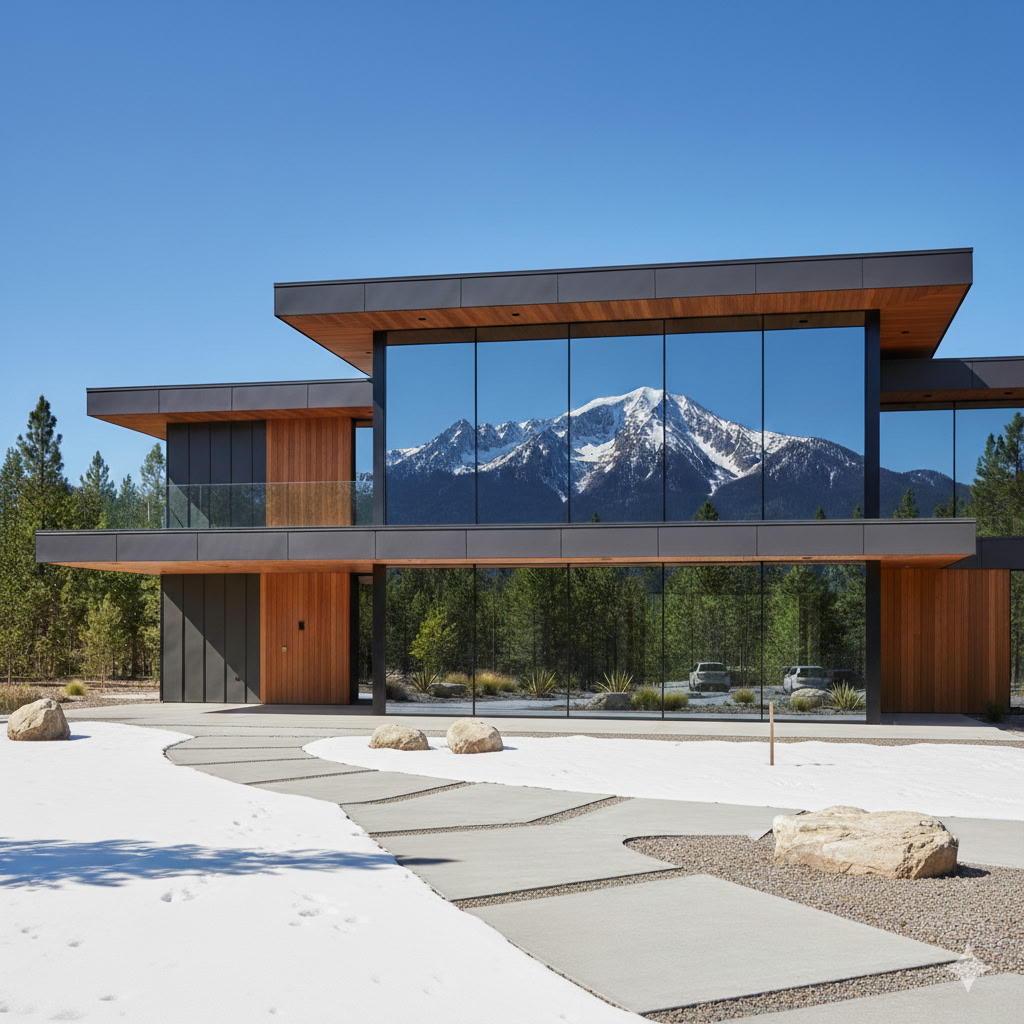

Material choices get expensive when they solve one problem and create two more. That is why custom aluminum composite panels continue to gain traction across commercial facades, retail build-outs, multifamily exteriors, and high-end residential projects. They give project teams a way to control appearance, durability, and installation efficiency without defaulting to heavier or higher-maintenance cladding systems.
For builders, architects, and owners, the appeal is straightforward. You can achieve a clean, modern finish while also meeting practical demands around weather resistance, flatness, weight, and long-term upkeep. The real value, though, is not just in the panel itself. It is in the ability to tailor dimensions, colors, finishes, and fabrication details to the specific needs of a project.
What custom aluminum composite panels are
Aluminum composite material, often called ACM, is made by bonding two thin aluminum sheets to a core material. That construction creates a panel that is lighter than solid metal of similar visual scale while still delivering rigidity and a refined finished look. In the field, that matters because lighter panels can simplify handling, fabrication, and installation.
The word custom is where many projects separate commodity panels from specification-ready building products. Custom aluminum composite panels can be produced in project-specific sizes, colors, gloss levels, finishes, and edge details. They can also be fabricated for cassette systems, routed and returned assemblies, trim integration, soffits, column covers, canopies, and interior feature walls.
That flexibility makes them useful well beyond one design style. A panel can support a minimal, monolithic facade on one building and a branded, high-contrast storefront on another. The base material stays consistent, but the finished result can look very different depending on the design intent.
Why specifiers choose custom aluminum composite panels
A standard panel might work for a simple layout, but custom sizing and fabrication often improve the full installation package. When panel dimensions are aligned with the building grid, framing layout, and opening locations, crews spend less time adapting material on site. That can reduce waste, speed installation, and help maintain a cleaner finish.
Appearance control is another major factor. Architects and owners rarely want a generic metallic panel if the project calls for a specific wood-look finish, matte black surface, brushed effect, or brand color. Custom aluminum composite panels allow that level of design control while keeping the performance profile of ACM in place.
There is also a maintenance advantage. Compared with some traditional cladding materials, ACM surfaces are easier to keep clean and do not require the same cycle of repair, sealing, or repainting. That does not mean every finish behaves the same way. Performance depends on coating quality, exposure conditions, and whether the panel is used on an exterior envelope or an interior application. But in general, low maintenance is one of the strongest reasons buyers keep coming back to this category.
Performance benefits that matter on real projects
Durability is usually the first checkpoint. Panels need to hold up against moisture, UV exposure, wind, and temperature swings without looking worn after a short period. Quality ACM is valued because it resists corrosion, maintains a stable appearance, and performs well in demanding climates when properly specified and installed.
Weight is the second practical advantage. Heavier cladding can drive up structural demands, shipping complexity, and labor intensity. Aluminum composite panels give teams a lighter option that still supports a polished architectural finish. On retrofit work especially, that lower weight can be a significant advantage.
Flatness is another detail that tends to matter more once a project is underway. Uneven surfaces are easy to spot on modern elevations, especially with reflective or dark finishes. ACM panels are favored in part because they provide a smooth, consistent look across large wall areas.
Energy performance can also enter the discussion, although this is where specifics matter. The panel itself is not a full insulation strategy. In most assemblies, energy performance depends on how the ACM integrates with insulation, air barriers, rainscreen design, and attachment methods. The right panel system can support a high-performing wall, but it should be evaluated as part of the full envelope rather than as a stand-alone claim.
Where custom ACM panels work best
Exterior facades are the most visible application. Commercial buildings, offices, healthcare sites, hospitality properties, educational facilities, and mixed-use developments often use ACM to create a clean envelope with strong visual definition. It works well for both large uninterrupted expanses and more segmented elevations with reveals and accent zones.
Storefronts and retail environments also benefit from custom panels because branding and finish consistency matter. A panel system can frame entrances, wrap parapets, and create signage backgrounds while maintaining a professional appearance that holds up under constant exposure.
On residential projects, ACM is often used more selectively. You may see it on modern custom homes, multifamily developments, entry features, balcony surrounds, soffits, or garage facades. Homeowners drawn to contemporary design often appreciate the crisp lines and low maintenance, but budget sensitivity can affect how broadly the material is used.
Interior applications are worth attention as well. Column covers, lobby walls, elevator surrounds, reception areas, and feature panels can all benefit from the same finish quality and fabrication control. In those settings, ACM gives designers a durable decorative surface without the weight of thicker solid materials.
Design options and trade-offs
Customization is one of the biggest strengths of ACM, but it still requires disciplined product selection. Color matching, finish durability, sheen level, and panel size all influence the final result. A matte finish may reduce glare and create a more understated facade, while a gloss finish can heighten contrast and visibility. Neither is automatically better. It depends on the project image, lighting conditions, and maintenance expectations.
Wood-look and specialty finishes can be especially useful when a project wants warmth without taking on the upkeep of natural materials. That said, not all simulated finishes are equal. The quality of the coating system and the consistency across production runs are critical, especially on phased projects or large elevations.
Panel size also involves trade-offs. Larger panels may reduce visible joints and create a bold, monolithic look, but they can affect handling, transportation, and fabrication complexity. Smaller modules may be easier to manage and replace, though they introduce more seams into the design. Good panel planning balances aesthetics with field practicality.
What to review before ordering custom aluminum composite panels
The earlier customization starts, the better the outcome tends to be. Waiting until late in the project to finalize dimensions, attachment methods, or finish selections can create avoidable delays. Shop drawing coordination is particularly important because ACM systems depend on precision. Small errors in dimensioning or support alignment can show up clearly once panels are installed.
It is also important to confirm application requirements. Exterior wall systems, interior decorative features, and specialty fabricated elements may require different considerations around finish performance, fire-related criteria, wind load design, and support details. This is not a one-size-fits-all product category.
Lead time should be part of the conversation as well. Custom colors, fabricated returns, or non-standard sizes may require more production time than stocked material. For contractors and developers, that affects procurement planning just as much as price does.
Finally, buyers should evaluate supplier support, not just panel cost. A dependable source helps with finish selection, technical guidance, fabrication coordination, and application fit. That becomes especially valuable on projects where appearance standards are high and installation conditions are tight. First Class Building Products serves this kind of need by focusing on specification-ready materials with custom design flexibility rather than treating panels as interchangeable commodity stock.
Making the right choice for the project
Custom aluminum composite panels are not the answer to every cladding challenge, but they are one of the most practical options when a project needs modern aesthetics, reliable durability, and design control in the same package. They perform best when the panel system, finish, and fabrication details are selected with the building use, climate exposure, and installation method in mind.
If the goal is to reduce maintenance, sharpen the design, and avoid forcing standard materials into a non-standard application, customization usually pays off. The smartest material decisions are the ones that make the build easier now and the property easier to own later.


Leave a Reply