


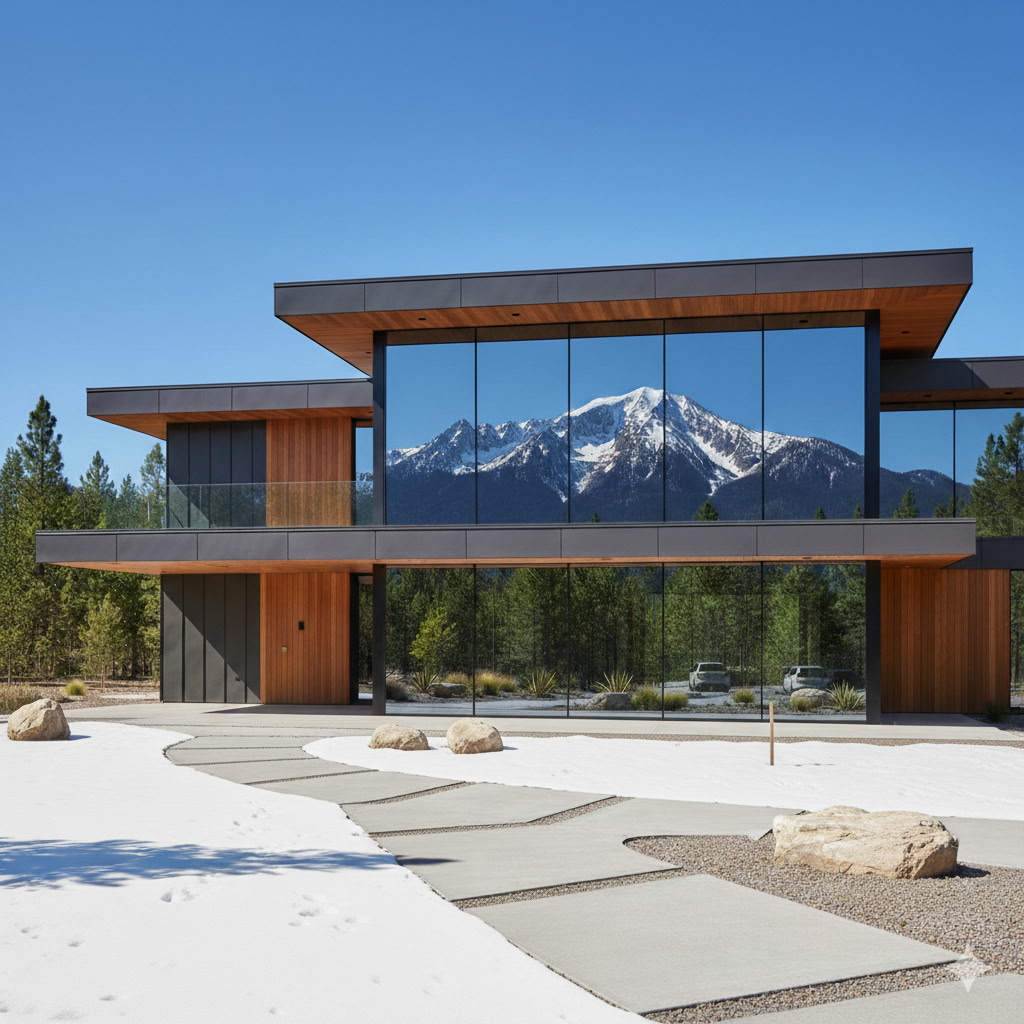

A cold-climate window failure is rarely subtle. Frost appears at the glass edge, rooms near the exterior wall feel drafty, and heating equipment works harder than the building owner expected. Selecting the best windows for cold climates means looking beyond appearance and glass count. The complete window system – glazing, frame, spacers, weatherstripping, hardware, and installation – must control heat loss, air leakage, and interior condensation.
For builders, renovators, architects, and homeowners, the right specification protects occupant comfort while supporting a durable, refined exterior envelope. The wrong one can create callbacks, moisture concerns, and higher operating costs for years.
What Cold-Climate Windows Must Control
Winter performance starts with three conditions: conductive heat loss through the window assembly, air movement around operable components and installation gaps, and moisture that condenses when warm indoor air reaches a cold surface. A window can have attractive sightlines and premium hardware yet still underperform if any one of these factors is overlooked.
The priority is a low whole-window U-factor. U-factor measures the rate of heat transfer, so lower numbers indicate better insulating performance. Do not rely only on center-of-glass values. The frame, sash, edge spacer, and glass-to-frame junction can materially affect the whole-unit result. For projects in severe northern climates, a low whole-window U-factor should be a primary requirement, not an afterthought.
Air leakage deserves the same attention. Even high-performing insulated glass will not solve a room that feels cold because outside air is entering through poor seals, weak hardware engagement, or an improperly prepared rough opening. Look for tested air-leakage data and window systems with reliable compression seals. Casement and awning configurations often provide strong weather sealing because the sash closes against the frame, although the best operating style still depends on ventilation, egress, cleaning access, and design requirements.
Best Windows for Cold Climates Start With the Glass
For many cold-region projects, triple-pane insulated glass is the strongest baseline. Its added pane and airspace improve insulation, raise the interior glass temperature, and reduce the uncomfortable cold-radiation effect occupants feel when sitting near a window. It also helps lower the chance of interior condensation when humidity rises during winter.
Triple-pane glass is not automatically the correct choice for every opening. It adds weight, can increase unit cost, and may affect the size, operation, or hardware requirements of very large sash configurations. A well-built double-pane unit with low-emissivity coatings, gas fill, a thermally efficient frame, and excellent installation may be appropriate for a less severe climate zone, a sheltered elevation, or a budget-sensitive renovation. The specification should respond to the project, not a blanket rule.
Low-E coatings are essential because they reflect radiant heat back toward the interior while allowing useful daylight through. The exact coating selection affects solar heat gain, visible light, and overall energy performance. In colder regions, some solar gain can be beneficial, especially on south-facing elevations. But maximum solar gain is not always desirable. Large west-facing openings can contribute to overheating and glare during sunny shoulder seasons, while shaded north elevations may need a different balance.
Gas fills, typically argon or krypton, further improve performance between panes. Krypton can support thinner insulating spaces and high-performance triple-pane assemblies, but it generally comes at a higher cost. It is best evaluated as part of the entire glazing package rather than as a standalone selling point.
Warm-edge spacers are another meaningful detail. The perimeter of an insulated glass unit is often colder than the center of the glass. A quality spacer helps reduce heat transfer around that edge, improving interior surface temperatures and reducing condensation risk.
Frame Materials Matter as Much as Glass
The frame is part of the thermal envelope. A high-performance glass package placed in a poorly insulating frame will not deliver the expected whole-window result.
Vinyl frames can provide good thermal performance and low maintenance when they are properly engineered, reinforced where required, and suited to the opening size. They are commonly used in residential work because they offer a practical cost-to-performance balance. Their limitations may become more relevant in large-format designs, darker colors, or projects requiring very narrow profiles.
Fiberglass frames are valued for strength, dimensional stability, and low thermal expansion. They can be a strong choice for demanding climates and large openings, particularly when the project calls for durable performance with a refined appearance. Product quality still varies, so tested ratings and construction details remain essential.
Aluminum offers strength, clean profiles, and design flexibility, making it common in contemporary and commercial applications. Standard aluminum is highly conductive, however, and is not a cold-climate solution without a properly engineered thermal break. Thermally broken aluminum window systems can perform well, but the thermal break design, glazing option, and full system ratings should be reviewed carefully.
Wood and wood-clad windows can deliver excellent insulation and a premium architectural appearance. They also require confidence in finish durability, flashing details, and long-term maintenance planning. In wet or exposed locations, the exterior cladding and water-management approach are just as important as the wood interior.
Use Performance Ratings Correctly
A window schedule should compare certified whole-unit values, not marketing descriptions such as “energy efficient” or “winter ready.” U-factor, solar heat gain coefficient, visible transmittance, air leakage, and condensation resistance each describe a different aspect of performance.
A lower U-factor reduces heat loss. Solar heat gain coefficient, or SHGC, indicates how much solar energy passes through the window. Visible transmittance helps evaluate daylight. Air-leakage ratings indicate how much air moves through the assembly under test conditions. Condensation resistance can offer useful guidance, but it should not replace proper humidity control or a low U-factor.
Climate zone, building orientation, glazing area, and interior use all affect the right target. A mountain home with expansive glass, a multifamily development in the Upper Midwest, and a commercial storefront in New England should not receive the same window schedule by default. Local energy code establishes a minimum, but code compliance is not always equivalent to the comfort or durability level a premium project requires.
Installation Can Make a Premium Window Perform Poorly
The installation is where good products either become a reliable envelope component or a recurring problem. The window must be integrated with the wall’s water-resistive barrier, flashing sequence, insulation layer, and interior air barrier. Those details keep bulk water out while limiting cold air and moisture migration into the rough opening.
Avoid treating spray foam as the only installation strategy. Low-expansion foam can help insulate gaps, but it cannot correct poor shimming, missing flashing, or discontinuous air sealing. The unit must be square, plumb, level, and properly supported so it operates correctly and maintains gasket compression over time.
Interior air sealing is especially important in cold climates. Indoor air carries moisture. If that air reaches a cold cavity around the window opening, it can condense within the wall assembly even when no visible water appears indoors. Exterior water management and interior air control work together, and neither should be omitted.
For replacement work, assess the existing opening before selecting an insert or full-frame replacement. Insert windows can preserve trim and reduce disruption, but they also reduce glass area and may leave hidden issues in the original frame unaddressed. Full-frame replacement provides a better opportunity to inspect the opening, improve flashing, and restore the air and water barrier connections.
Specify for the Exposure, Not Just the Address
Two homes in the same city can need very different window solutions. A protected opening under a deep roof overhang faces less wind-driven rain and snow than a large, exposed elevation. High-wind zones, coastal areas, upper floors, and open sites may require more attention to structural ratings, drainage design, and hardware performance.
Large window walls also deserve a realistic conversation about comfort. Even a high-quality triple-pane system has a lower insulating value than a well-insulated opaque wall. The goal is not to avoid glass, but to balance design intent with orientation, shading, interior heating strategy, and the selected window system. Perimeter heat sources may still be appropriate near expansive glazing in severe climates.
Color and finish should also be specified thoughtfully. Dark exterior frames can be visually striking, but they absorb more solar heat and may require frame materials and finishes designed to manage thermal movement. This is particularly relevant for large units and elevations with sustained direct sun.
A Better Standard for Winter Performance
The best choice is a tested, whole-system window matched to the project’s climate, exposure, design, and installation method. Prioritize a low whole-window U-factor, effective air sealing, high-quality insulated glass, thermally appropriate frames, and a documented flashing and air-barrier plan. Then review operational needs, sightlines, maintenance expectations, and budget without compromising the envelope details that are expensive to correct later.
First Class Building Products helps project teams evaluate European-designed window and door solutions with performance and design requirements in view. Bring the elevation, opening sizes, climate conditions, and target performance values into the selection process early. That is when a window becomes more than a finish selection – it becomes a dependable part of the building envelope.


Leave a Reply