


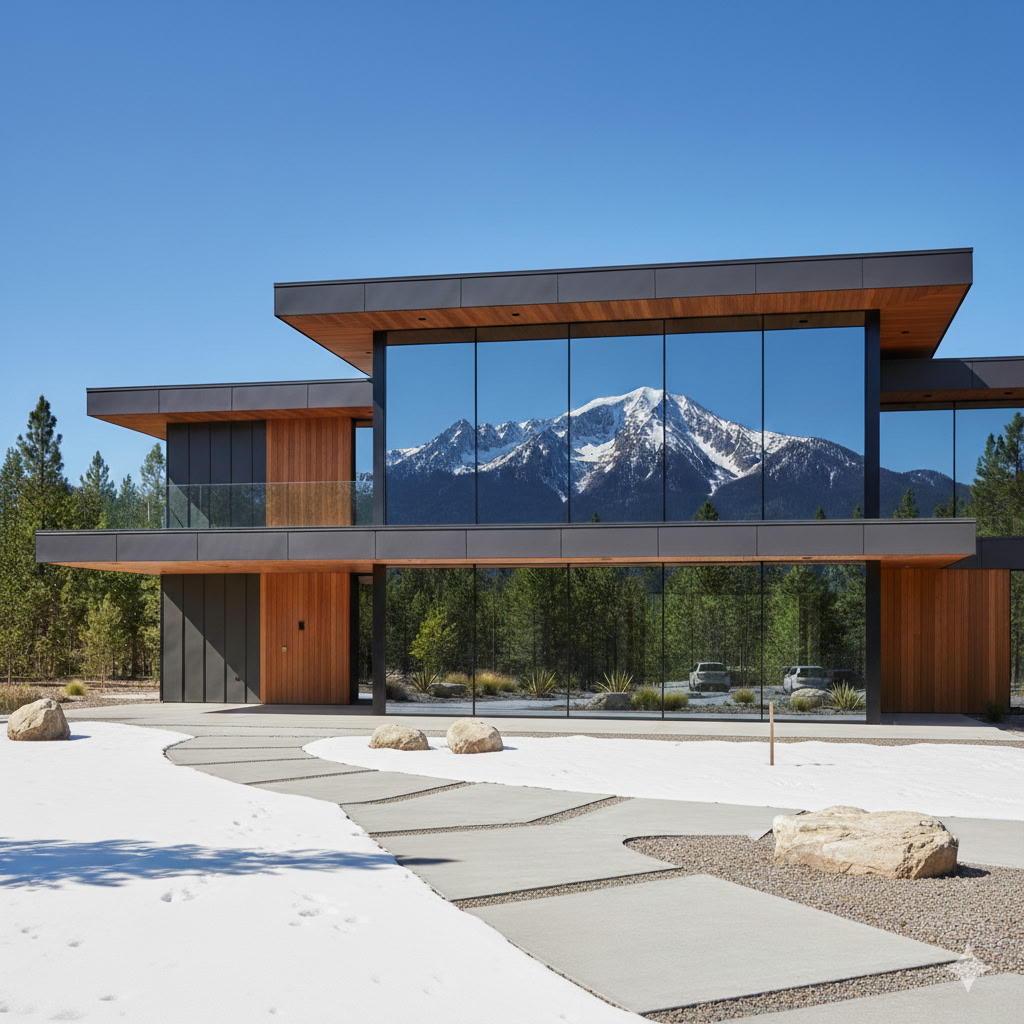

A facade can look excellent at turnover and still create years of avoidable maintenance if the cladding does not match the building, exposure, and detailing. In the aluminum panels vs fiber cement decision, the right material is rarely the one with the lowest material price. It is the one that supports the intended appearance while performing reliably within the complete wall assembly.
Both materials are proven exterior cladding options for residential and commercial work. They differ in weight, water behavior, finish options, installation requirements, and long-term upkeep. A clear comparison helps builders, architects, developers, and property owners specify with fewer surprises.
Aluminum Panels vs Fiber Cement: Start With the Wall System
Aluminum panels are a broad category. They may include solid aluminum sheets, formed architectural panels, or panel systems attached to a subframe. Their performance depends on panel thickness, coating, attachment method, joint design, insulation, drainage plane, and the details at openings and terminations.
Fiber cement is a cement-based composite reinforced with cellulose fibers. It is commonly installed as lap siding, vertical panels, shingles, or large-format architectural sheets. It also depends on correct flashing, clearances, fastening, and field finishing where applicable.
Neither material replaces a properly designed water-resistive barrier, flashing package, or drainage path. Exterior cladding is the visible layer of an envelope system, not the entire weather barrier. This distinction matters most on rain-exposed elevations, tall buildings, and projects with extensive window and door openings.
Appearance and Design Flexibility
Aluminum is often selected when a project requires crisp geometry, a modern profile, or a continuous panelized appearance. It can be fabricated in custom sizes, profiles, colors, and finishes, including metallic, matte, textured, and wood-look options. Folded edges and concealed fastening systems can create sharp shadow lines with fewer visible interruptions across the facade.
This flexibility is particularly useful for commercial storefronts, multifamily developments, contemporary homes, soffits, column wraps, and feature walls. Aluminum panels can also coordinate with glazing systems, metal trim, and other architectural elements without forcing the design into a traditional siding pattern.
Fiber cement offers a different design advantage. It can reproduce the familiar look of painted wood lap siding, board-and-batten, shingles, or smooth panels while delivering greater resistance to rot and insect damage than wood. For residential neighborhoods, renovations, and projects where a classic painted exterior is the goal, fiber cement can feel more appropriate than metal.
The trade-off is that fiber cement layouts generally include more visible joints, trims, or courses. Large-format fiber cement panels can achieve a contemporary look, but aluminum usually provides more freedom for custom folds, integrated details, and highly tailored visual effects.
Moisture, Weather, and Impact Performance
Aluminum does not absorb water, swell, or rot. That makes it a strong option for wet climates, coastal exposure, and areas where repeated freeze-thaw cycling can challenge absorbent materials. Quality coatings help preserve color and surface appearance, while properly designed panel systems can support drainage and ventilation behind the cladding.
However, aluminum is not indestructible. Thin or poorly supported panels can dent from impact. Panel gauge, backing, support spacing, and the location of the application should be evaluated early. High-traffic loading zones, school entrances, and other exposed areas may require a more impact-conscious panel selection or protective design measures.
Fiber cement is also well suited to demanding weather when installed correctly. It does not rot like wood and is not a food source for termites. Still, it is a cementitious material that can hold moisture if edges, fasteners, cut ends, and clearances are poorly managed. Keeping panels clear of grade, roofing, and standing water is essential.
Fiber cement is hard and stable in service, but it can chip or crack when mishandled during transport, cutting, or installation. Its performance depends heavily on installers following the manufacturer’s fastening pattern and handling requirements. Material that arrives at the jobsite in good condition can lose its value quickly if it is stored improperly or installed with rushed details.
Maintenance Requirements Over Time
For owners focused on low routine maintenance, aluminum panels have a clear advantage. Most finishes need periodic cleaning to remove dirt, pollutants, and surface residue. There is typically no recurring repainting cycle, and the material does not need caulking at every panel joint when the system uses open rainscreen joints and proper backing components.
Maintenance is still necessary around penetrations, sealant joints, flashings, and transitions. Those are assembly details, not reasons to avoid aluminum. They should be accessible for inspection and selected for compatibility with the panel finish and adjacent materials.
Fiber cement often needs more ongoing attention, especially painted products in strong sun, wet climates, or locations with frequent surface contamination. Factory-finished boards can reduce initial painting work and provide a more consistent appearance, but coatings eventually age. Depending on exposure and product type, repainting may become part of the ownership plan.
This does not make fiber cement a poor investment. It means its lifecycle budget should include cleaning, touch-ups, and eventual recoating rather than treating it as a maintenance-free finish.
Installation, Weight, and Jobsite Planning
Fiber cement is heavier and more brittle than aluminum. It requires proper cutting tools, dust-control practices, and careful handling. Larger panels may need additional labor for lifting and alignment. On renovation work, its weight can also affect handling logistics and attachment planning.
Aluminum panels are comparatively light, which can simplify handling and reduce load on the supporting structure. Panelized systems can move quickly when dimensions, subframing, and shop drawings are coordinated before installation. Custom fabrication also makes it possible to plan panel breaks around windows, corners, and mechanical penetrations rather than solving those transitions in the field.
That efficiency comes with a requirement for precision. Aluminum panels demand accurate substrate conditions and disciplined layout. Small alignment errors become visible when joints are intended to be straight and consistent across a large elevation. Field measurements, approved details, and clear responsibility for interface conditions are essential.
Fiber cement may be more forgiving visually in traditional siding layouts, but it still needs consistent reveals, correct fastener placement, and carefully managed expansion details. Neither option should be selected without confirming the wall framing, sheathing, air and water barrier, insulation strategy, and fastening substrate.
Initial Cost and Lifecycle Value
Material pricing alone can make fiber cement appear more economical, particularly for standard residential siding profiles. It is widely understood by installers and can be a practical choice where the desired aesthetic is conventional painted siding and the budget is tightly controlled.
Aluminum panels often carry a higher initial investment because of fabrication, coatings, subframing, custom sizing, and specialized installation. On projects where design intent, low maintenance, and long service life are priorities, that investment can be justified. Fewer repainting cycles and a more durable finish can improve lifecycle value, especially on hard-to-access elevations.
Installed cost should be evaluated as a complete scope. Include trims, flashings, corner conditions, labor, equipment, waste, repainting expectations, and the cost of managing future repairs. A lower material cost does not always produce a lower ownership cost.
Which Material Fits Your Project?
Choose aluminum panels when the project calls for a refined architectural facade, custom colors or dimensions, minimal maintenance, strong moisture resistance, and clean panel geometry. They are especially effective for modern residential exteriors, commercial facades, multifamily common areas, and accent applications where the finish is part of the building’s identity.
Choose fiber cement when the desired appearance is traditional siding or painted board-and-batten, when a familiar residential installation approach is beneficial, and when the project can accommodate future coating maintenance. It remains a capable cladding choice for many homes and light commercial buildings.
Fire performance should be evaluated at the assembly level, not assumed from a single cladding material. Confirm the applicable building code, tested wall assembly requirements, insulation type, air cavity configuration, and local jurisdiction requirements before finalizing either specification.
The best selection comes from reviewing elevation drawings, exposure conditions, intended service life, and finish expectations before pricing is locked. First Class Building Products can help project teams compare panel options, custom dimensions, colors, and details so the exterior is specified for the building it needs to protect.

Leave a Reply