


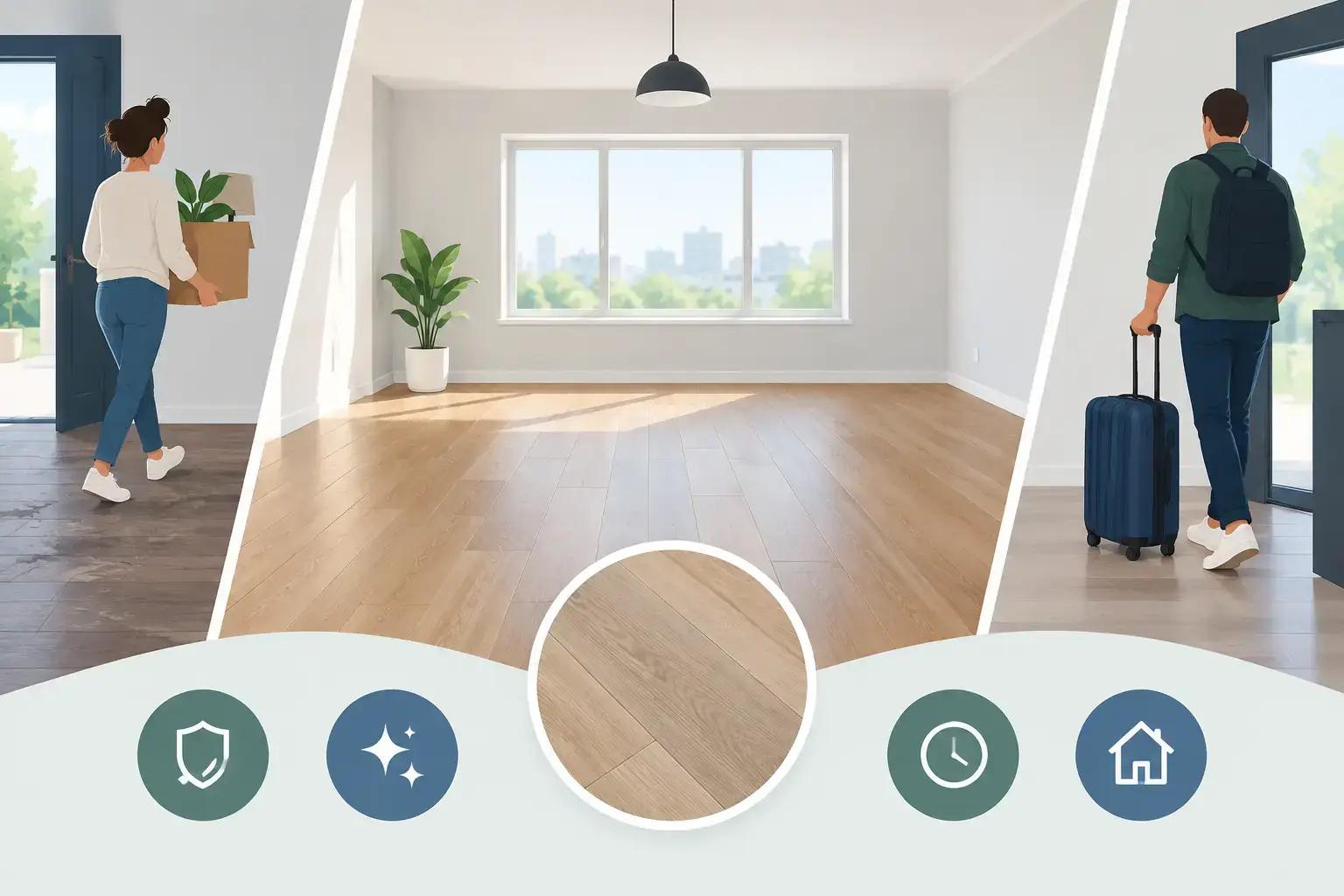
A flooring decision can either shorten a unit turn or create another line item before the next lease is signed. Rental flooring needs to look finished on day one, but its real value is measured after moving carts, pet traffic, spills, furniture drag, maintenance calls, and repeated cleanings. For owners, developers, and contractors, the right selection protects the asset while keeping replacement work manageable.
For many residential rental and light-commercial applications, rigid core flooring such as SPC offers a practical balance of appearance, water resistance, and durability. It is not the right answer for every room or every budget, but it addresses many of the conditions that make rental properties difficult to maintain.
What Rental Flooring Must Handle
Owner-occupied flooring can be chosen around a household’s preferences and maintenance habits. Rental properties need a more disciplined specification. The floor has to withstand a wide range of residents, cleaning products, furniture layouts, and maintenance practices without becoming the first finish that needs attention.
The most common failure points are predictable: surface scratching in living areas, water exposure near entries and kitchens, staining in bedrooms, chipped edges along transitions, and damage caused when furniture is moved out quickly. A material that looks attractive but requires delicate care can increase turnover costs, especially across a portfolio of units.
The best rental flooring choices also support visual consistency. When a damaged room must be repaired, the replacement product should be available in a compatible color and format. Choosing a fashionable finish that is difficult to source later may create a mismatch that forces a larger replacement than the damage warrants.
Durability is more than a wear layer
Wear layer thickness matters for resilient flooring, particularly in high-traffic corridors, living rooms, and commercial common areas. However, it is only one part of performance. The core, locking system, edge construction, backing, and installation conditions all affect how well a floor holds up.
SPC flooring uses a dense stone polymer composite core that provides stability and resistance to dents from typical residential use. Its rigid construction can also help reduce the visibility of minor subfloor imperfections compared with thinner flexible products. That does not eliminate subfloor preparation. A flat, dry, properly prepared substrate remains essential for a reliable installation and a clean finished appearance.
For a rental project, evaluate the full product construction rather than selecting on plank appearance alone. A realistic oak visual may attract tenants, but dependable locking edges and a commercial-appropriate wear surface are what help the floor remain serviceable through multiple lease cycles.
Water resistance protects the finish, not every condition
Waterproof SPC flooring is well suited to kitchens, bathrooms, laundry areas, entryways, and ground-level units where moisture exposure is a concern. Unlike many wood-based flooring products, it will not readily swell from a surface spill. This is a meaningful advantage in rentals, where a leak or wet shoe tray may not be addressed immediately.
Still, waterproof flooring does not correct a plumbing leak, wet subfloor, poor drainage, or chronic humidity problem. Water can reach perimeter gaps, transitions, walls, and the substrate. In bathrooms and other wet areas, installers should follow the flooring manufacturer’s instructions for expansion space, trim details, and approved sealants where applicable. Building-envelope and moisture issues should be corrected before new flooring is installed.
Why SPC Fits Many Rental Applications
SPC flooring has become a strong option for apartments, rental homes, student housing, condominium rentals, and selected commercial interiors because it combines practical performance with a broad range of visuals. Wood-look planks can give a unit a warmer, more current presentation than basic sheet goods while remaining straightforward to clean.
Its low-maintenance profile is especially relevant during turnover. Most routine care involves vacuuming or dry sweeping debris and cleaning with a manufacturer-approved product. There is no need for refinishing, waxing, or specialized wood-floor maintenance. That helps maintenance teams standardize cleaning procedures across units.
The product also supports design consistency across different spaces. A single neutral plank selection can work through living rooms, halls, bedrooms, kitchens, and entry areas, reducing transition points and simplifying material ordering. In a premium rental or build-to-rent property, a consistent floor can make smaller rooms feel more connected and improve the overall impression during showings.
There are trade-offs. Rigid core flooring can sound harder underfoot than carpet and may require an appropriate underlayment or acoustic assembly in multifamily buildings. Some properties have association rules or local code requirements for sound ratings, particularly in upper-level units. SPC can also feel cooler than carpet in bedrooms, and a heavily textured surface may hold more dirt than a smoother finish. Product selection should match the property class, tenant profile, and building requirements rather than follow a one-material approach.
Specifying Rental Flooring for Lower Turnover Costs
A successful flooring specification begins with the building and operating plan. A luxury downtown unit, a family-oriented single-family rental, and a high-traffic medical office have different performance demands. Before choosing a color, identify the spaces receiving the material, expected traffic, moisture exposure, acoustic requirements, and available maintenance resources.
For a typical rental property, four details deserve close attention:
- Wear surface: Select a wear layer appropriate for the level of traffic, especially in hallways, living areas, lobbies, and commercial tenant spaces.
- Core and locking profile: Confirm that the product is designed for the installation method and conditions on site, including temperature variation and subfloor requirements.
- Finish and color: Mid-tone wood visuals often conceal light dust and minor marks better than very dark or very light floors. Avoid excessive texture where quick cleaning is a priority.
- Repair strategy: Keep extra material from the original production run when possible. Label cartons with the product name, color, lot information, and room locations for future service work.
Do not overlook trim and transitions. Baseboards, reducers, stair nosings, end caps, and door-jamb details determine whether an installation looks complete and whether exposed edges remain protected. In rentals, loose or poorly matched trim becomes a recurring maintenance concern. A complete specification includes these finishing components from the start.
Choose room-specific solutions when needed
Using one flooring material throughout a unit can reduce installation complexity, but it is not always the best decision. Carpet may still be appropriate in bedrooms where acoustic comfort is a priority. Tile can be the better choice for certain shower-adjacent areas or high-end bathroom designs. In commercial properties, specialty flooring may be required for healthcare, food service, or other regulated environments.
The goal is not to force every room into the same product category. It is to select materials that perform in their intended environment while keeping the palette coordinated. SPC can serve as the durable foundation across much of the property, with other finishes used where they provide a clear functional benefit.
Installation Decisions That Protect the Investment
Even a premium flooring product can underperform when installed over an unsuitable substrate. Contractors should inspect for flatness, moisture, structural movement, and existing-floor conditions before installation begins. Manufacturer requirements for acclimation, expansion gaps, layout, and approved installation methods should be followed without shortcuts.
In occupied renovations, scheduling matters as much as material selection. Floating SPC systems can often support efficient installation because they do not require the same curing time associated with some adhesive-based products. However, speed should not come at the expense of preparation. Correcting a subfloor after tenants move in is far more disruptive than addressing it before the first plank is installed.
For larger developments, establish a mockup unit or sample area before finalizing the full order. This allows the project team to review color under actual lighting, transition details, wall colors, cabinetry, and door clearances. It also gives installers a clear standard for the finish expected across every unit.
A Better Long-Term Flooring Decision
Rental flooring should support the way a property is operated, not just the way it photographs. The lowest initial price can become expensive when floors stain, separate, swell, or require broad replacement between tenants. A well-specified, properly installed product can reduce avoidable maintenance while helping the space retain a clean, current appearance.
First Class Building Products helps project teams evaluate performance-driven interior materials, including SPC flooring, with the same focus on durability, finish quality, and specification fit used across the rest of the building. The right floor is the one that keeps working after the keys change hands, the furniture moves out, and the next tenant walks through the door.


Leave a Reply