


A window can have high-performance glass and still lose substantial energy through its frame. This thermal break window guide focuses on the part of window performance that is often overlooked during specification: how the frame manages heat transfer, condensation risk, comfort, and long-term durability.
For builders, architects, developers, and homeowners, thermal break windows are especially relevant when aluminum framing is part of the design. Aluminum offers strength, slim sightlines, corrosion resistance, and design flexibility. It is also highly conductive. Without a thermal break, exterior cold or heat can move through an aluminum frame far more easily than through insulated glass.
What Is a Thermal Break Window?
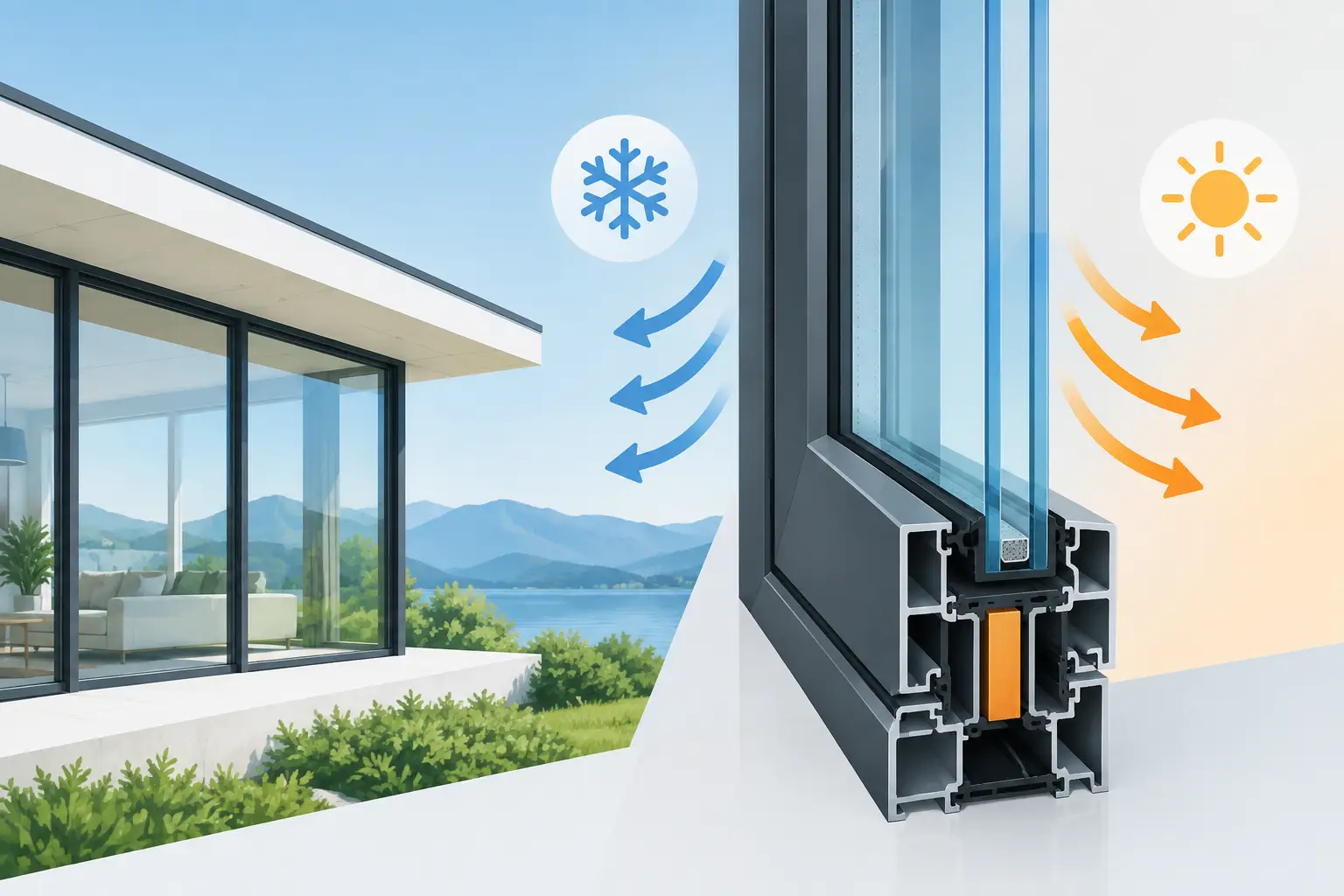
A thermal break window uses an insulating material within the frame to separate the interior aluminum section from the exterior aluminum section. Most systems use reinforced polyamide strips, though the exact material and configuration vary by manufacturer.
That separation interrupts the direct conductive path through the frame. In practical terms, it reduces the rate at which outdoor temperatures travel through the aluminum and affect the inside surface of the window.
A thermally broken aluminum window is not simply an aluminum window with better glass. The frame itself is engineered as part of the thermal envelope. This distinction matters because the frame, sash, glazing pocket, spacers, gaskets, and installation all contribute to the finished assembly’s performance.
Why the Thermal Break Matters
The clearest benefit is improved energy performance. During winter, a non-thermally broken metal frame can become very cold on the interior face. In summer, it can transfer exterior heat inward. A thermal break moderates those surface temperatures, reducing demand on heating and cooling equipment.
The second benefit is condensation resistance. When warm, humid indoor air reaches a cold interior frame surface, moisture can condense. Repeated condensation can stain finishes, damage adjacent materials, promote mold growth, and create avoidable maintenance concerns. A thermal break helps keep the interior frame warmer in cold weather, lowering the likelihood of condensation. It does not eliminate risk in every building or climate, particularly where indoor humidity is poorly controlled, but it is a major improvement over conventional metal framing.
Comfort is another practical consideration. Occupants notice cold drafts and radiating chill near poorly performing windows even when the HVAC system is operating correctly. A well-specified thermal break frame, paired with appropriate insulated glass, creates more stable interior surface temperatures around the opening.
For premium residential work and commercial projects with broad glazed elevations, these improvements support both building performance and occupant experience.
Thermal Break Window Guide: What to Compare
Do not select a window based on the phrase “thermal break” alone. The size and design of the break, the overall frame geometry, glazing options, weather seals, and tested ratings all affect the result. Ask for documented performance data for the complete window or door system, not just a description of individual components.
U-Factor and Solar Heat Gain Coefficient
U-factor measures how readily heat moves through the complete window assembly. Lower U-factor values indicate better insulating performance. Compare like-for-like products, including the same glass configuration and frame type. A quoted center-of-glass value is not the same as the U-factor of the complete window.
Solar Heat Gain Coefficient, or SHGC, measures the portion of solar heat admitted through the glazing. Lower SHGC can help control cooling loads in hot, sunny exposures. Higher SHGC may be beneficial in heating-dominated climates where winter solar gain is desirable. The appropriate choice depends on climate zone, orientation, shading, and HVAC strategy.
Visible transmittance should also be reviewed when daylight is central to the design. Tinted coatings and low SHGC glass can reduce solar gain but may also reduce natural light. The right specification balances energy targets with the building’s intended appearance and use.
Condensation Resistance and Air Infiltration
Condensation resistance ratings can provide useful guidance, particularly for projects in cold climates or buildings with elevated interior humidity. They should be considered alongside indoor humidity levels, ventilation design, and the thermal performance of surrounding wall assemblies.
Air infiltration is equally important. Thermal performance will be undermined if air moves freely around sashes, frame joints, or installation gaps. Look for tested air infiltration data and make sure the installation details preserve the system’s intended seals, drainage paths, and perimeter continuity.
Glass Package and Edge Detail
Insulated glass units do much of the work in a window assembly. Double-pane glass with low-E coatings and argon fill is common for many projects. Triple-pane glass can provide lower U-factors and improved comfort in demanding climates, but it adds weight, cost, and sometimes reduces visible light transmission.
Warm-edge spacers help limit heat transfer at the perimeter of the glass, where condensation often begins. A thermally broken frame paired with a poor glass edge detail is not a complete solution. Review the assembly as a system.
Where Thermal Break Windows Make the Most Sense
Thermally broken aluminum windows are a strong choice where design requires narrow profiles, large openings, contemporary aesthetics, or durable metal finishes without accepting the thermal penalty of standard aluminum frames. They are frequently specified for custom homes, multifamily properties, office buildings, hospitality projects, storefront-style applications, and renovations with modernized facades.
They are particularly valuable in regions with cold winters, hot summers, large daily temperature swings, or frequent humidity. However, climate alone should not determine the decision. A coastal project may prioritize corrosion-resistant finishes and water management, while a mountain project may place greater weight on low U-factor and condensation control.
For mild climates with limited heating and cooling demand, a thermal break may offer a longer payback period. Even then, it can still improve comfort, reduce condensation exposure, and support a higher-quality building envelope. The project budget, glazing area, operating conditions, and ownership horizon should guide the specification.
Installation Is Part of Window Performance
A high-performance window cannot compensate for poor installation. The rough opening must be prepared to manage water, air, and movement. Flashing should direct incidental water to the exterior, while perimeter air sealing should connect the window frame to the building’s air barrier strategy.
Avoid filling every gap without considering drainage and expansion. Aluminum frames expand and contract with temperature changes, and window systems require properly designed clearances, shims, sealants, and backer rod. Blocking drainage channels or weep paths can trap water within the frame and create failures that look like product defects.
Installation crews should follow the approved system details rather than relying on generic window methods. This is especially critical for larger units, mulled assemblies, punched openings in rainscreen walls, and installations that meet ACM panels, cladding, masonry, or other exterior systems.
Questions to Ask Before You Specify
Before finalizing a thermal break window package, confirm the required energy code values for the project location and review the complete performance documentation. Verify the U-factor, SHGC, air infiltration, water penetration resistance, structural ratings, glass safety requirements, and any applicable sound-control needs.
Also confirm the operational type and daily use. Fixed windows can achieve different performance levels than operable units. Casement, awning, sliding, tilt-turn, and folding systems each involve different hardware, seals, opening sizes, and maintenance expectations. Large operable panels may be visually compelling, but they require careful structural and installation coordination.
Finish selection deserves the same level of attention. Durable aluminum finishes can support a wide range of colors and architectural expressions, but dark exterior finishes exposed to intense sun may experience greater heat buildup and movement. Specify finish quality appropriate for the exposure, especially in coastal or high-UV environments.
First Class Building Products helps project teams evaluate European-designed window and door systems alongside the wider exterior envelope, so the chosen frame, glazing, finish, and installation approach work together.
A thermal break window is most valuable when it is treated as part of the building envelope rather than a standalone product upgrade. Start with the climate, code requirements, facade design, and desired interior comfort level, then select a tested system that supports those project priorities for the long term.


Leave a Reply