


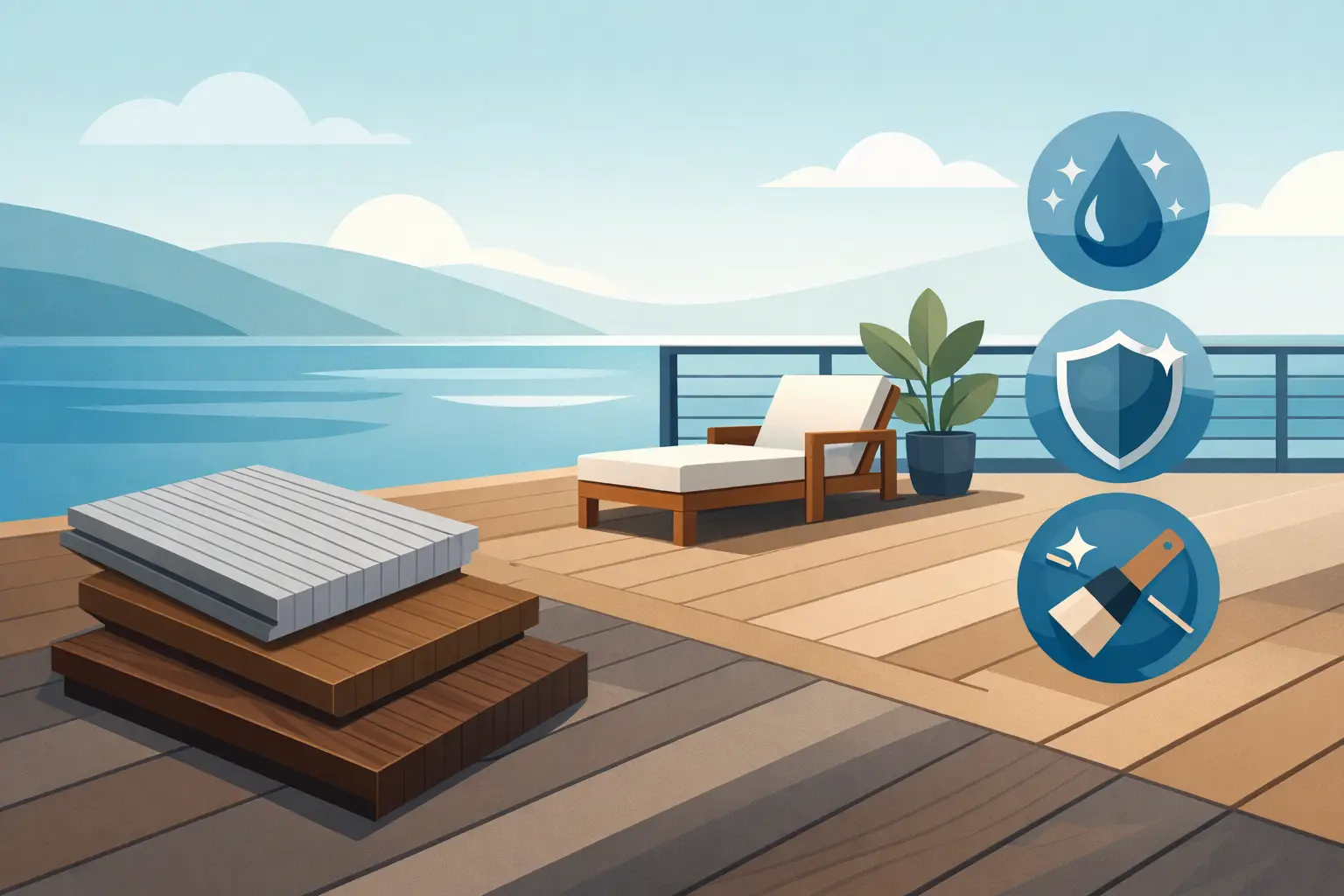
A deck that looks sharp on install day but needs constant sanding, staining, and board replacement stops being an asset pretty quickly. For most builders, renovators, and homeowners, the best low maintenance decking material is the one that holds its appearance, resists moisture, and keeps service calls to a minimum over the long term.
That answer is not always the same for every project. Climate, sun exposure, foot traffic, budget, structural requirements, and finish expectations all matter. A lakefront deck in a freeze-thaw region has different demands than a covered backyard entertainment space in a dry climate. The right choice comes down to balancing upkeep, durability, and design.
What makes the best low maintenance decking material
Low maintenance does not mean no maintenance. It means the material resists the issues that usually create labor and replacement costs – rot, splintering, insect damage, staining, fading, and moisture movement. It should also clean up easily without requiring a refinishing cycle every few years.
For most projects, the best-performing low-maintenance deck boards share a few traits. They do not absorb much water, they remain dimensionally stable in changing temperatures, and they are manufactured for consistent quality. Just as important, they deliver a finished look that stays presentable without heavy annual upkeep.
This is why the conversation usually centers on composite decking, PVC decking, and aluminum decking, with pressure-treated wood and hardwoods serving as comparison points rather than true low-maintenance leaders.
Composite decking is the leading choice for most projects
If you are comparing options based on practical performance, composite is often the best low maintenance decking material for a wide range of residential and light commercial applications. It offers a strong balance of durability, appearance, and manageable upkeep.
Composite decking is typically made from a blend of recycled wood fibers and plastics, often protected by a cap layer that improves stain, fade, and moisture resistance. That cap is a major reason modern composite performs better than early-generation boards. In the right product category, it gives contractors and owners a surface that does not need staining, sealing, or painting.
The day-to-day maintenance is simple. Most composite decks need periodic sweeping and occasional washing with soap and water. That is a major advantage over wood, especially on projects where owners want the look of a refined deck without committing to regular refinishing.
Composite also performs well from a design standpoint. It is available in a broad range of colors, grain patterns, and board profiles, which makes it easier to match modern exteriors, mixed-material facades, and higher-end residential builds. For buyers who care about both aesthetics and service life, that combination is hard to ignore.
There are trade-offs. Composite can cost more upfront than pressure-treated lumber. Lower-quality boards may show more thermal movement, and some products can get hotter in direct sun than natural wood. Installation details matter too. Proper spacing, substructure alignment, and fastening systems affect long-term performance.
Still, for many specifiers and homeowners, capped composite or WPC decking hits the sweet spot. It reduces maintenance substantially while still delivering a warm, architectural finish.
PVC decking offers strong moisture resistance
If the deck is exposed to heavy moisture, pool splash, coastal conditions, or repeated wet-dry cycling, PVC deserves close attention. Unlike composite, PVC decking contains no wood fiber, which helps it resist water absorption even more effectively.
That makes PVC a strong candidate for projects where mold resistance and minimal moisture-related movement are priorities. It also tends to be easy to clean, and it does not require sealing or staining. In environments where water is a constant factor, those advantages can justify the higher material cost.
PVC does have a different feel underfoot and a slightly different visual character than composite. Some owners prefer the more natural look of composite boards, especially in premium residential settings. PVC can also expand and contract more with temperature swings, so installers need to follow manufacturer guidance carefully.
For pool decks, rooftop decks, and humid climates, PVC can outperform many alternatives on maintenance reduction alone. If visual warmth is the top priority, composite may still be the better fit.
Aluminum decking is durable, but it is niche
Aluminum decking is one of the most durable low-maintenance options on the market. It will not rot, warp, crack, or attract insects, and it performs exceptionally well in wet climates. It is also noncombustible, which can be relevant in certain regions and project types.
From a maintenance perspective, aluminum is hard to beat. It typically needs little more than basic cleaning. It is also lightweight and strong, which can offer benefits in certain structural conditions.
Why is it not the default answer for the best low maintenance decking material? Mostly because appearance, feel, and price narrow its use. Aluminum has a more specialized aesthetic that does not suit every residential design. It can also be more expensive than composite, and some clients simply want a deck surface that feels less industrial.
For commercial settings, waterfront applications, and projects where performance outweighs all other concerns, aluminum can be an excellent option. For mainstream residential demand, composite and PVC usually have broader appeal.
Why wood usually falls short on maintenance
Pressure-treated wood remains common because of its lower upfront cost and familiar installation process. But it rarely ranks as the best low maintenance decking material. Wood needs regular sealing or staining, can crack and splinter over time, and is more vulnerable to moisture-related issues.
Even high-end hardwoods like Ipe offer more durability than standard lumber, but they still require upkeep if the goal is to preserve color and finish. Some owners accept that maintenance cycle because they want authentic wood. That is a valid choice, but it is not a low-maintenance one.
For contractors managing client expectations, this distinction matters. Many buyers focus on initial material pricing and underestimate the labor and product costs required to keep wood looking good over the years. A lower purchase price can become a higher lifecycle cost.
How to choose the right material for the job
The best selection starts with how the deck will be used. A private backyard deck with moderate traffic has different needs than a restaurant patio or multi-unit residential application. Load requirements, traffic volume, cleaning frequency, and local climate should all shape the decision.
If the client wants the most balanced option for appearance, durability, and reduced upkeep, composite is often the safest recommendation. If the deck will face constant moisture, PVC may offer better long-term value. If the environment is especially demanding and aesthetics are secondary, aluminum may be worth the premium.
It is also worth looking beyond the deck board itself. A low-maintenance deck system depends on more than surface material. Fasteners, framing conditions, ventilation, drainage, and edge detailing all affect how the assembly performs over time. Poor water management can undermine even a premium board.
Color selection matters as well. Darker boards can show more heat buildup in full sun, while lighter tones may better support comfort in exposed outdoor spaces. On high-visibility projects, texture and finish consistency should be reviewed carefully before final specification.
Cost should be measured over time, not just at purchase
Material price is only one part of the equation. The better question is what the deck will cost to own over 10 to 20 years. When you factor in staining, sealing, replacement boards, labor, and appearance decline, low-maintenance materials often compare more favorably than they do at first glance.
That is especially true for projects where property value, tenant appeal, or brand image matter. A deck that stays cleaner, straighter, and more consistent with less intervention supports a better finished environment. It also reduces long-term headaches for owners and maintenance teams.
For that reason, many professionals now treat premium composite or WPC decking as the default benchmark. Suppliers such as First Class Building Products serve this demand by focusing on durable, design-conscious materials that support both performance and visual quality.
So what is the best low maintenance decking material?
For most residential and mixed-use projects, capped composite decking stands out as the strongest all-around answer. It offers the best balance of low upkeep, weather resistance, appearance retention, and design flexibility. PVC is a close competitor where moisture exposure is extreme, while aluminum remains a high-performance option for more specialized conditions.
The right material is the one that fits the site, the budget, and the owner’s expectations after year five, not just day one. Choose with the full lifecycle in mind, and the deck will work harder, look better, and demand far less from everyone responsible for it.


Leave a Reply