


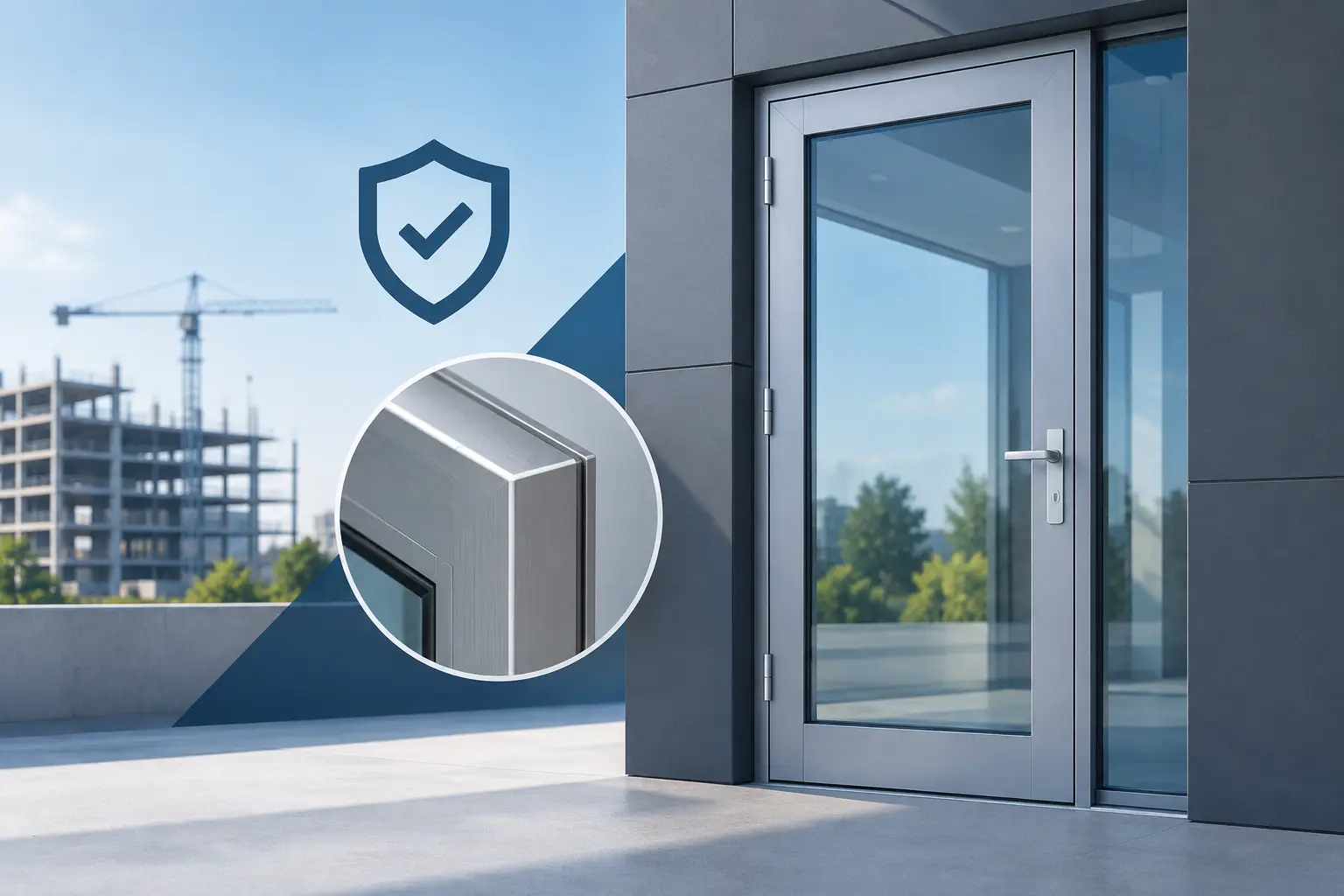
A door opening is one of the most heavily used and exposed parts of a building. It faces wind-driven rain, daily traffic, shifting temperatures, impacts from carts or furniture, and years of opening and closing. Aluminum door durability makes it a strong choice for these conditions, but the material alone does not determine how well a door performs. Profile design, finish quality, hardware, glazing, and installation all matter.
For builders, architects, and property owners, the practical question is not whether aluminum can last. It can. The question is whether the complete door system is specified for the building, climate, use level, and maintenance expectations of the project.
What Makes Aluminum Doors Durable?
Aluminum is naturally well suited to door construction because it does not rot, swell, or attract insects. Unlike wood, it does not absorb moisture and change shape with repeated wet and dry cycles. Unlike untreated steel, it does not develop red rust when its surface is scratched or exposed to moisture.
Its strength-to-weight ratio is another advantage. Aluminum frames can support large glass panels and narrow sightlines without the excessive weight associated with some other materials. This is valuable in modern residential entries, patio openings, storefronts, office suites, and multifamily common areas where clean lines and daylight are part of the design brief.
Durability, however, is not the same as being maintenance-free or indestructible. Aluminum can dent under a concentrated impact. Lower-quality or poorly applied finishes can fade, chalk, or peel. In coastal and industrial settings, salt and airborne pollutants require more careful material and finish selection. A high-performing system accounts for these exposures before fabrication begins.
Aluminum Door Durability Starts With the Frame System
Not all aluminum doors use the same profiles, wall thicknesses, alloys, or fabrication methods. A light-duty interior door and a commercial exterior entry may look similar from a distance, yet their expected performance is very different.
For exterior applications, frame sections should be designed to resist deflection from wind pressure and the weight of the selected glass. Excessive movement can affect weather seals, alignment, lock engagement, and long-term operation. On larger openings, reinforced profiles and correctly engineered mullions are often necessary to keep the system stable.
Fabrication quality is equally important. Corners, joints, drainage paths, screw locations, and glazing pockets must work together to manage water and movement. Water that enters an exterior door system should be directed back out through designed drainage channels, not trapped inside the frame. Proper weep paths help prevent staining, corrosion at concealed connections, and damage to adjacent finishes.
Thermal Breaks Protect More Than Energy Performance
A thermal break separates the interior and exterior portions of an aluminum frame with a low-conductivity material. It reduces heat transfer, which helps control condensation and supports better energy performance.
This detail also has a durability benefit. In cold climates, uninsulated aluminum frames can become cold enough for interior moisture to condense on the frame. Repeated condensation can affect nearby finishes, create staining, and contribute to uncomfortable interior conditions. For conditioned homes and commercial buildings, thermally broken systems are generally the better long-term choice.
The appropriate level of thermal performance depends on the local climate, glazing package, and building envelope design. A mild-climate exterior door may not require the same frame specification as a project facing northern winters or high summer heat. Matching the system to the application avoids both under-specifying and paying for performance the project does not need.
Finish Quality Determines How the Door Ages
The frame finish is the visible protective layer that clients judge for years after installation. Powder coating and high-performance painted finishes are common choices because they offer durable color, consistent coverage, and a broad range of design options. Anodized finishes are also valued for their metallic appearance and strong surface performance.
The right choice depends on exposure and aesthetic goals. Dark colors can create higher surface temperatures in direct sun, especially on south- and west-facing elevations. This does not make dark aluminum doors unsuitable, but it makes proper profile design, finish quality, and allowance for thermal movement more important. Custom colors and finishes should be evaluated with the same attention given to standard options.
Coastal projects deserve additional review. Salt deposits can remain on the surface and concentrate around joints, thresholds, and hardware. A finish rated for the environment, compatible hardware, and a scheduled fresh-water cleaning routine are practical protections. The same thinking applies to urban locations where airborne contaminants can build up over time.
Hardware Often Sets the Service Life
A well-made aluminum frame will not compensate for undersized hinges, poor locking hardware, or an incorrectly selected closer. In high-use openings, hardware is often the first component to show wear.
Door weight, width, height, usage frequency, and exposure should guide the hardware specification. A large glazed pivot door has different demands than a standard hinged entry door. A retail or multifamily common-area opening may require commercial-grade hinges, panic hardware, closers, and threshold components designed for frequent cycles.
Corrosion-resistant hardware is especially relevant near the coast, around pools, and in other moisture-prone areas. Mixing dissimilar metals without appropriate separation can also create corrosion concerns at fasteners and connections. Qualified fabricators address material compatibility during system design rather than after damage appears.
Routine adjustment matters. A door that starts dragging at the threshold or requires force to latch should be corrected promptly. Continued use when the door is out of alignment transfers stress to hinges, locks, weatherstripping, and the frame itself.
Installation Can Preserve or Reduce Expected Performance
Even a premium aluminum door can underperform if it is installed out of square, poorly flashed, or unsupported at key load points. Installation must account for the actual wall condition, not just the rough-opening dimensions shown on a plan.
The sill and threshold require particular attention. They need proper support, slope where required by the system, compatible flashing, and an unobstructed drainage path. Sealant is necessary, but it should not be treated as the only defense against water intrusion. Durable installations use a complete water-management approach with flashing, drainage, backer material, and properly tooled sealant joints.
Anchoring also needs to allow for building movement and material expansion. Aluminum expands and contracts with temperature changes. A frame fixed too rigidly, or attached without appropriate clearances, can experience stress that affects operation and finish appearance over time. This is one reason installation instructions and approved details should be followed closely rather than improvised on site.
Maintenance Is Simple, Not Optional
Aluminum doors require less upkeep than many wood systems, but regular care extends their service life and protects their appearance. For most projects, cleaning the frame with mild soap, water, and a soft cloth is sufficient. Abrasive pads, harsh solvents, and strong alkaline cleaners can damage finishes and should be avoided unless specifically approved by the manufacturer.
A practical inspection twice each year can identify small issues before they become costly repairs. Check that drainage openings are clear, weatherstripping remains flexible and intact, screws are secure, hinges operate smoothly, and locks engage without forcing the door. Exterior doors in coastal or high-pollution environments may need more frequent cleaning.
Glass and seals should also be considered part of the door system. Failed glazing seals, cracked gaskets, or degraded sweep seals can affect comfort and water resistance even when the aluminum frame remains in excellent condition.
Where Aluminum Is the Right Choice
Aluminum doors are particularly effective where projects need durability, narrow profiles, large glass areas, low maintenance, or custom dimensions and finishes. They work well for contemporary residences, commercial entries, office partitions, multifamily buildings, hospitality spaces, and exterior openings exposed to sun and rain.
There are trade-offs. Aluminum is generally a higher initial investment than basic hollow-core or low-cost vinyl options. It also needs thermal breaks and quality glazing to deliver strong energy performance in demanding climates. For projects where a warmer natural material appearance is the priority, wood may be preferred, although it will require more maintenance. The best choice comes from balancing design intent, exposure, budget, energy targets, and expected use.
A durable door is not simply a frame that survives the weather. It is a complete system that continues to operate, seal, secure, and look appropriate for the building long after turnover. Specify aluminum doors with the same care given to the rest of the exterior envelope, and the opening can remain one of the project’s most dependable details.
Leave a Reply